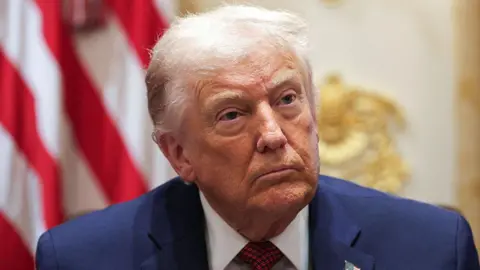
President Trump wrapped up a noteworthy four-day tour of the Middle East, which concluded with an extravagant business event in Abu Dhabi on Friday. This visit was characterized by high-profile receptions and substantial business agreements with Gulf nations, marking a dramatic pivot in U.S. foreign policy during Trump's second term.
During this final day in the United Arab Emirates, Trump visited an interfaith center before leaving for the U.S. Earlier in the week, he made stops in Saudi Arabia and Qatar, emphasizing economic collaboration.
Among the pivotal moments was Trump's unprecedented meeting with Syria's new president, Ahmed al-Shara, sparking significant controversy as he announced the lifting of U.S. sanctions on Syria. This move is expected to provide much-needed economic relief to the war-torn nation, which has suffered immense hardships over the past decade.
The trip also led to the announcement of sizable contracts for U.S. corporations, notably a major order from Qatar for Boeing jets, though specifics on these agreements remain largely undisclosed as many had been under negotiation prior to Trump's visit.
Additionally, discussions surrounding nuclear negotiations with Iran emerged, as Trump hinted at progress while maintaining a firm stance against allowing Iran to develop nuclear capabilities.
In contrast, Trump's approach to the ongoing conflict in Gaza was notably subdued. He did not meet with Israel, the U.S.'s primary ally in the region, and expressed concern for civilians impacted by violence, acknowledging, “there’s a lot of people starving, a lot of bad things going on.”
Finally, Trump opted out of attending the Russia-Ukraine cease-fire talks in Turkey, despite speculation about a possible trip. With low expectations for breakthroughs, officials from Russia and Ukraine held discussions without President Putin's presence.
This elaborate tour has not only positioned Trump in favorable light with Gulf nations but has raised questions regarding the implications of his diplomatic choices, particularly concerning Syria’s leadership and broader regional conflicts.
During this final day in the United Arab Emirates, Trump visited an interfaith center before leaving for the U.S. Earlier in the week, he made stops in Saudi Arabia and Qatar, emphasizing economic collaboration.
Among the pivotal moments was Trump's unprecedented meeting with Syria's new president, Ahmed al-Shara, sparking significant controversy as he announced the lifting of U.S. sanctions on Syria. This move is expected to provide much-needed economic relief to the war-torn nation, which has suffered immense hardships over the past decade.
The trip also led to the announcement of sizable contracts for U.S. corporations, notably a major order from Qatar for Boeing jets, though specifics on these agreements remain largely undisclosed as many had been under negotiation prior to Trump's visit.
Additionally, discussions surrounding nuclear negotiations with Iran emerged, as Trump hinted at progress while maintaining a firm stance against allowing Iran to develop nuclear capabilities.
In contrast, Trump's approach to the ongoing conflict in Gaza was notably subdued. He did not meet with Israel, the U.S.'s primary ally in the region, and expressed concern for civilians impacted by violence, acknowledging, “there’s a lot of people starving, a lot of bad things going on.”
Finally, Trump opted out of attending the Russia-Ukraine cease-fire talks in Turkey, despite speculation about a possible trip. With low expectations for breakthroughs, officials from Russia and Ukraine held discussions without President Putin's presence.
This elaborate tour has not only positioned Trump in favorable light with Gulf nations but has raised questions regarding the implications of his diplomatic choices, particularly concerning Syria’s leadership and broader regional conflicts.