The article text:
In the vast and isolated landscape of Western Australia, Rio Tinto's Greater Nammuldi iron ore mine serves as a model for the future of mining through its fleet of giant, driverless trucks. Located about two hours north of Perth in the Pilbara region, this remote site operates with a transient workforce of around 400 employees. These workers are flown in for shifts lasting between four to eight days, with no permanent residents on site.
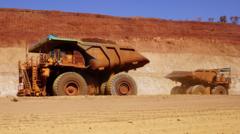
Navigating the red-earth roads of the open-pit mine are enormous trucks, each the size of a townhouse, designed to carry a staggering 300 tonnes without a human driver behind the wheel. Observing these colossal machines in action, one can't help but feel a mix of awe and apprehension, especially knowing their operations are managed remotely.
Inside a conventional company vehicle, I was accompanied by Dwane Pallentine, a production superintendent, as we encountered one of these autonomous trucks on our tour. Their route is predefined, and our vehicle even features high-precision GPS to ensure proximity control with the self-driving fleet. This means our car could be seen within a virtual framework that governs the trucks’ movements, allowing us to share the road safely.
Greater Nammuldi now hosts more than 50 self-driving trucks, with a handful still operated manually within designated zones. As part of the technological advancements at the site, an autonomous water cart lovingly nicknamed "Henry" has also been introduced for dust control on road surfaces. A vast Operational Centre in Perth, about 1,500 km south, oversees all autonomous machinery across Rio's Pilbara operations.
The pace of automation in mining is accelerating, with Australia leading the world in deploying driverless technology. Rio Tinto's burgeoning fleet is not just a local phenomenon; it's part of a global trend where the number of self-driving haul trucks has surged to over 2,000 in just four years.
The primary rationale for this sweeping embrace of automation is safety. Heavy machinery poses significant risks to human operators, who can easily succumb to fatigue or error. Matthew Holcz, the managing director of Rio's Pilbara mines, noted the correlation between automation and a marked decrease in workplace incidents. In addition to enhancing safety, automation has also boosted productivity by approximately 15%, as these machines can operate continuously without the typical interruptions caused by human shifts or breaks.
However, this technological evolution has not come without substantial investment costs, estimated in the billions of dollars. Despite fears surrounding job losses due to automation, workers have adapted to new roles within the company. Many former truck drivers have transitioned to controller positions, while others have successfully reskilled for various equipment operations.
While automation presents transformative prospects, experts caution that interface designs used by operators and controllers still require optimization to prevent potential operational lapses. Furthermore, the risk of reliance on automation poses challenges in ensuring human safety amidst enhanced machinery capabilities.
Though Rio Tinto has made great strides in integrating autonomous vehicles, reports of incidents, such as the dangerous collision of autonomous trains, illustrate the ongoing complexities and challenges within the mining sector's automation journey.
As Rio continues to expand its fleet and explore further automation options, including unstaffed excavators from leading manufacturers, the industry watches closely. In the interim, workers at the Greater Nammuldi mine grapple with the unpredictable nature of travel logistics as I awaited a delayed flight back to Perth—a reminder of the intricate human elements that still command significant attention amid the rise of automated operations.
In the vast and isolated landscape of Western Australia, Rio Tinto's Greater Nammuldi iron ore mine serves as a model for the future of mining through its fleet of giant, driverless trucks. Located about two hours north of Perth in the Pilbara region, this remote site operates with a transient workforce of around 400 employees. These workers are flown in for shifts lasting between four to eight days, with no permanent residents on site.
Navigating the red-earth roads of the open-pit mine are enormous trucks, each the size of a townhouse, designed to carry a staggering 300 tonnes without a human driver behind the wheel. Observing these colossal machines in action, one can't help but feel a mix of awe and apprehension, especially knowing their operations are managed remotely.
Inside a conventional company vehicle, I was accompanied by Dwane Pallentine, a production superintendent, as we encountered one of these autonomous trucks on our tour. Their route is predefined, and our vehicle even features high-precision GPS to ensure proximity control with the self-driving fleet. This means our car could be seen within a virtual framework that governs the trucks’ movements, allowing us to share the road safely.
Greater Nammuldi now hosts more than 50 self-driving trucks, with a handful still operated manually within designated zones. As part of the technological advancements at the site, an autonomous water cart lovingly nicknamed "Henry" has also been introduced for dust control on road surfaces. A vast Operational Centre in Perth, about 1,500 km south, oversees all autonomous machinery across Rio's Pilbara operations.
The pace of automation in mining is accelerating, with Australia leading the world in deploying driverless technology. Rio Tinto's burgeoning fleet is not just a local phenomenon; it's part of a global trend where the number of self-driving haul trucks has surged to over 2,000 in just four years.
The primary rationale for this sweeping embrace of automation is safety. Heavy machinery poses significant risks to human operators, who can easily succumb to fatigue or error. Matthew Holcz, the managing director of Rio's Pilbara mines, noted the correlation between automation and a marked decrease in workplace incidents. In addition to enhancing safety, automation has also boosted productivity by approximately 15%, as these machines can operate continuously without the typical interruptions caused by human shifts or breaks.
However, this technological evolution has not come without substantial investment costs, estimated in the billions of dollars. Despite fears surrounding job losses due to automation, workers have adapted to new roles within the company. Many former truck drivers have transitioned to controller positions, while others have successfully reskilled for various equipment operations.
While automation presents transformative prospects, experts caution that interface designs used by operators and controllers still require optimization to prevent potential operational lapses. Furthermore, the risk of reliance on automation poses challenges in ensuring human safety amidst enhanced machinery capabilities.
Though Rio Tinto has made great strides in integrating autonomous vehicles, reports of incidents, such as the dangerous collision of autonomous trains, illustrate the ongoing complexities and challenges within the mining sector's automation journey.
As Rio continues to expand its fleet and explore further automation options, including unstaffed excavators from leading manufacturers, the industry watches closely. In the interim, workers at the Greater Nammuldi mine grapple with the unpredictable nature of travel logistics as I awaited a delayed flight back to Perth—a reminder of the intricate human elements that still command significant attention amid the rise of automated operations.