
In brief
A new report shows that in the wake of the 2024 elections across 46 countries, women's representation in parliaments has stagnated, with some countries losing female members entirely. Major regions reporting declines include the US, India, and South Africa, while a few like Mongolia and Mexico made gains through quotas. The lack of support, violence against women in politics, and cultural barriers contribute to this sobering trend, suggesting urgent reforms are needed to enhance women’s political participation.
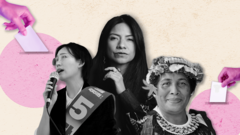
The year 2024, marked by significant elections around the globe, reveals a disappointing trend in women's political representation, as it recorded the slowest growth in two decades. Analyzing data from 46 countries, the BBC found that 27 parliaments have less female representation than before. Despite the participation of 3.6 billion people in these elections, notable declines were seen in countries including the US, Pakistan, and South Africa, with the European Parliament also witnessing its first-ever decrease in female members.The Inter-Parliamentary Union (IPU), which compiles and analyzes election data, indicates that around two-thirds of these countries reported a decline in the number of women elected. While notable gains were celebrated in places like the UK and Mexico—which elected its first female president—overall progress reflected a mere 0.03% increase in female representation this year.Mariana Duarte Mutzenberg from the IPU notes that many democracies exhibit fragile advancements, as highlighted by Tuvalu's fall from having its only female MP, Dr. Puakena Boreham, to a government devoid of women. Comparatively, women now represent only 27% of parliaments worldwide, with just 13 countries nearing parity.Duarte Mutzenberg attributes some of these gains to gender quotas, exemplified by Mongolia's rise to 25% female representation following the introduction of a 30% candidate quota. Conversely, nations without such quotas generally report a lower average of 21%. The example of Mexico, where political will led to gender parity goal achievement in 2018, underscores the impact of systematic approaches to increase women's political presence.Challenges remain significant, particularly in ministerial roles where female representation is notably low. Women's representation in cabinets does not reach the levels seen in national parliaments, often relegating women to roles concerning social affairs rather than finance or security.A persistent ambition gender gap hinders women's political pursuits; studies reveal that women frequently underestimate their qualifications for leadership positions. Changes in the political landscape can also create fewer mentoring opportunities for emerging female politicians.Financial barriers compound these issues, as women often face challenges in raising funds for campaigns. Societal norms sometimes hinder their election success due to persistent caregiving responsibilities. The lack of maternity leave policies within parliaments also deters potential candidates, as observed by Carlien Scheele from the European Institute for Gender Equality.Despite these structural challenges, certain electoral systems favor women’s representation. Countries employing proportional representation or mixed electoral systems tend to perform better than those using first-past-the-post methods.The issue of violence against women in politics, both physically and digitally, looms large in elections worldwide, discouraging younger women from entering the political arena. Coupled with a notable anti-feminist backlash and sentiments of reverse discrimination among young men in some regions, these barriers create a chilling effect that stymies progress.This stagnation in female political representation underscores the necessity for systemic changes to promote gender equality in governance. Equal representation not only reinforces the principles of fairness but is also pivotal to enhancing decision-making and national economies, as diverse groups have consistently shown better outcomes. With the inclusion of women in negotiations, prospects for sustainable peace and development improve, commanding attention and action from global leaders advocating for gender equality in politics.


