The Sudan National Museum, once a beacon of history showcasing the grandeur of ancient Nubian civilizations, now lies in ruins amid the turmoil of an ongoing conflict that has ravaged Sudan for two years. Once home to awe-inspiring statues, intricate wall paintings, and educational tours, the museum is a shadow of its former self as war inflicts deep wounds on Sudan's cultural identity.
Following the military's recent assertion of control over Khartoum, the catastrophic extent of the war’s impact on the museum has begun to reveal itself. Numerous government establishments and landmarks have suffered destruction, yet the museum, emblematic of Sudan's heritage, has endured specific assaults. Officials claim tens of thousands of artifacts were either destroyed or purloined during the RSF's occupation of central Khartoum. “They destroyed our identity and our history,” stated Ikhlas Abdel Latif Ahmed, the director of the Sudan's National Corporation for Antiquities and Museums.
Previously, the museum was a key cultural hub located strategically between the Blue and White Nile rivers, offering insight into the diverse civilizations that once thrived in Sudan. However, inspectors now report scenes of devastation, leaving behind shattered glass, scattered bullet casings, and indications of theft. Ahmed lamented, “The militia took so many of the unique collections and destroyed the rest.”
Looting has not been confined to the National Museum; several other cultural sites across Sudan have also faced similar fates. In a cautionary note, the UN's cultural agency, UNESCO, previously raised alarms about "threats to culture," urging art institutions not to facilitate the trade of smuggled artifacts from the beleaguered nation.
Even prior to the outbreak of war, the museum was undergoing refurbishment, leading many treasures to be packed away, making them easier targets for removal. There are suspicions that millions worth of artifacts were trafficked to the UAE, compounding international concerns regarding the RSF's financial activities. Ahmed expressed her despair about the theft of valuable pieces, including a historical gold collar from the 5th Century BC pyramid of King Talakhamani, whose current location remains unknown.
Despite stating plans to collaborate with Interpol and UNESCO to trace stolen artifacts, recovering these treasures appears to be a daunting challenge, with political tensions complicating the situation. Experts argue that the RSF's attacks symbolize a purposeful strike against Sudan's identity, rather than mere opportunistic criminality.
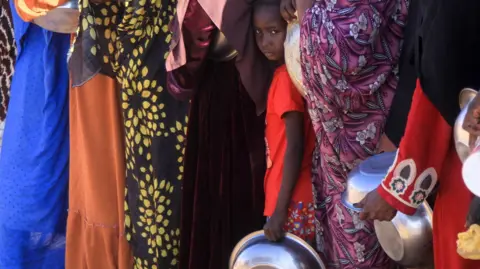
The broader humanitarian crisis arises concurrently with the cultural devastation, as nearly 13 million individuals have been displaced, and casualties have soared to concerning heights. Ahmed poignantly reflects on this loss, declaring, “The war is against the people of Sudan,” while expressing hope for the revival and restoration of the National Museum.
With determination, Ahmed and fellow advocates are committed to rebuilding Sudan's cultural heritage. “Inshallah [God willing], we will get all our collections back,” she vowed, holding onto the hope of reconstructing a more splendid future for the museum and its legacy amidst the ongoing strife.