In brief
After Typhoon Halong tore through Kwigillingok, Alaska, only a few residents remain amidst widespread evacuation. With homes uprooted and communities shattered, the future appears bleak as climate challenges persist, and the state aims to support displaced families. Local leaders hope to develop plans for relocation while dealing with immediate recovery efforts.
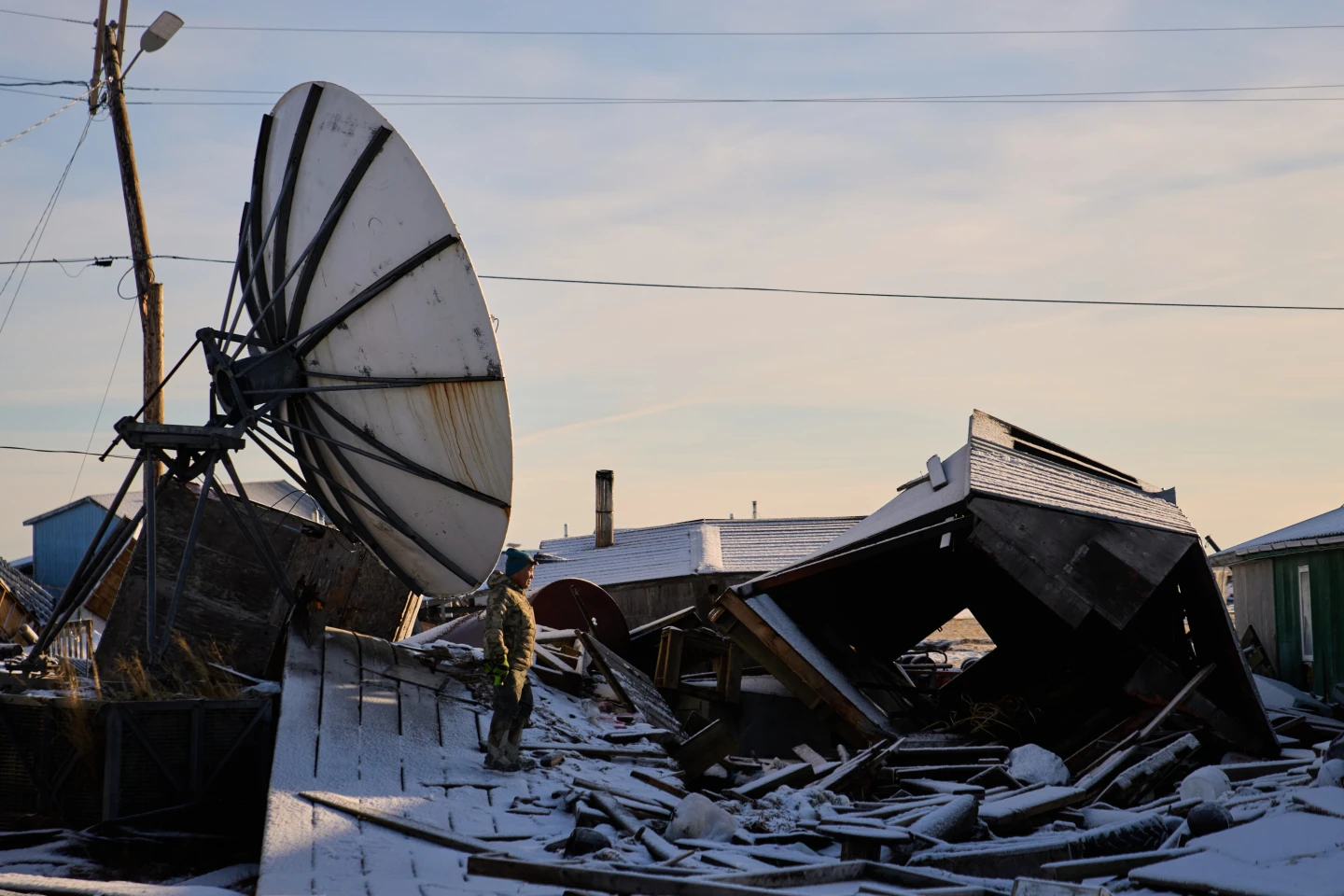
KWIGILLINGOK, Alaska (AP) — As helicopters and small planes flew off with the last evacuees from Kwigillingok, a village devastated by Typhoon Halong, Darrel John remained, one of only seven residents, determined not to abandon his community. The storm uprooted homes and submerged others in the Bering Sea. Amid rising climate threats, the governor's office focuses on repairing villages and supporting over 1,600 displaced individuals in shelters, often in cities far removed from their subsistence lifestyles.With climate change intensifying storms and rising seas, many residents question their future. Louise Paul, a Kipnuk resident, expressed fears of returning to a place increasingly prone to flooding. Meanwhile, Kwigillingok is the focus of immediate restoration efforts as homes float away like giant toys. As winter approaches and work crews attempt to stabilize the village, a long-term strategy for survival or relocation is urgently needed to ensure community continuity against the backdrop of an ever-changing climate.