Had last week's coup attempt in Benin been successful, it would have become the ninth to take hold in the region in the last five years alone.
Just a few days after soldiers took power in Guinea-Bissau while a presidential election vote count was still under way, leaders of the West African grouping Ecowas rapidly concluded that Sunday's attempted overthrow of Benin's President Patrice Talon was one destabilising step too far.
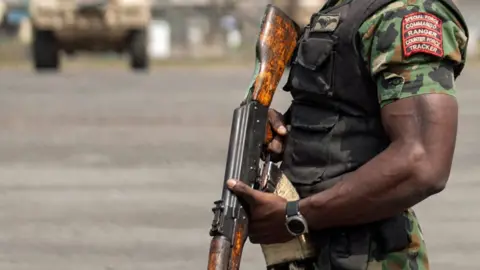
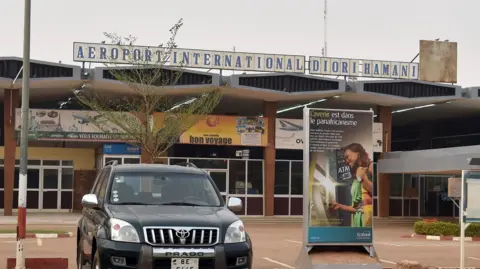
In support of his government, Nigerian warplanes bombarded mutinous soldiers at the national TV and radio station and a military base near the airport in Cotonou, the largest city.
Ecowas also announced the deployment of ground troops from Ghana, Nigeria, Ivory Coast and Sierra Leone to reinforce the defence of constitutional order.
This is a region that has been shaken by repeated coups since 2020, and which little more than 10 months ago saw the putschist regimes in Mali, Burkina Faso and Niger completely withdraw their countries from Ecowas - the Economic Community of West African States - of which they had all been founding participants 50 years ago.
Faced with the prospect that yet another civilian government might be overturned by discontented soldiers, the presidents of the remaining Ecowas member states rapidly reached the conclusion that the attempted coup in Cotonou could not be allowed to succeed.
Learning from Past Mistakes
Having fought off early morning putschist attacks on Talon's home and the presidency offices, loyalist forces had already reaffirmed government control across the city, locking down the main central administrative district.
But it was proving hard to break down the last-ditch resistance of rebel troops who had shown they were ready to use lethal force without regard for civilians.
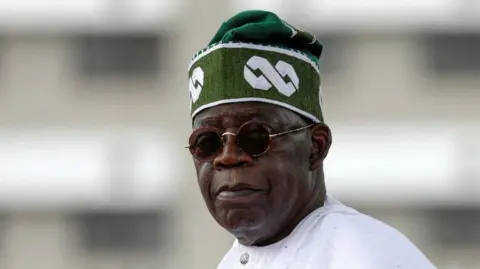
In response, Nigeria's President Bola Tinubu, Benin's eastern neighbour and much the largest military power in the region, authorised air strikes, while Ecowas leaders decided to despatch ground troops the same day.
Among those sending forces is Ghana's President John Mahama, who leads a resilient democracy but has made friendly diplomatic overtures to the Sahelian military regimes.
In acting so quickly, Ecowas has perhaps learned a lesson from its misjudged response to the 2023 coup in Niger.
Simmering Grievances
While the complaints against Talon aired by the would-be putschists during their brief appearance on national television are widely shared, there has been absolutely no sign of any popular support for their attempt to get rid of the government by force.
So Benin represented a particularly favourable context for a forceful Ecowas intervention in defence of constitutional civilian rule.
Indeed, if anything, the coup-plotters are likely to become the target of growing public anger as news of casualties circulates. At least one civilian – the wife of Talon's key military adviser – was killed.
This was just the latest in a string of coup attempts across the region, though most of the others have in fact succeeded.