
In brief
The European Commission’s president, Ursula von der Leyen, has called for coordinated action to safeguard external borders after tens of thousands crossed into Ceuta last week. Spain now records about 69,500 migrants who have returned to Morocco, with 72 deaths on the Spanish side and 11 in Morocco. Italian officials have briefly suspended Schengen rules in the city, sparking debate among EU partners over coexistence of free movement and security. The crisis has highlighted the need for early warning systems, dismantling smuggling networks, and the use of physical barriers where required.
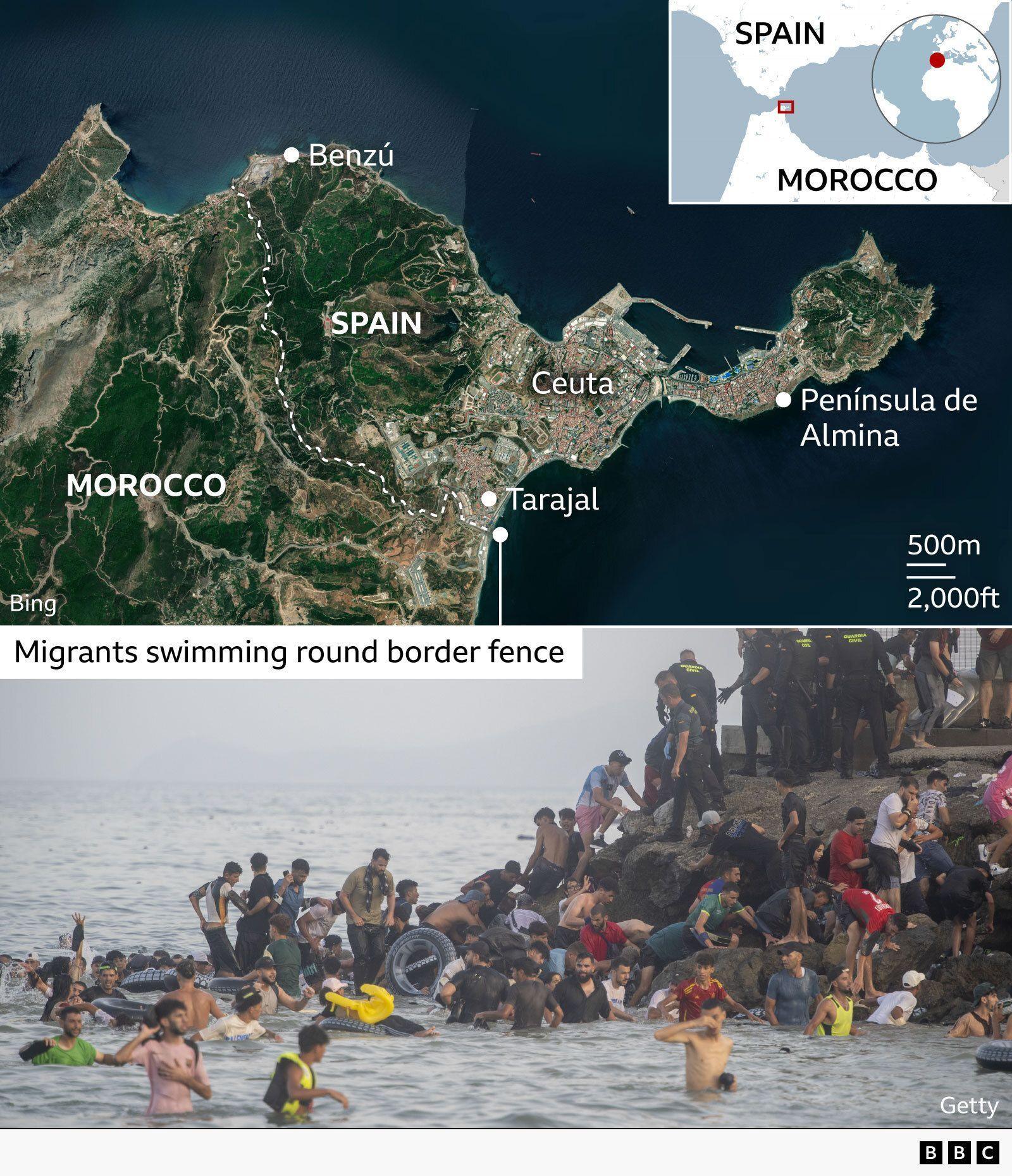
European Commission President Ursula von der Leyen has called for "united action" on border security on the eve of an emergency session of EU interior ministers after the chaotic influx of migrants from Morocco into the Spanish exclave of Ceuta.
Spain estimates that around 69,500 migrants have now returned to Morocco — higher than the initial forecast of 50,000 — and reports a Spanish death toll of 72 with 11 fatalities on the Moroccan side.
The German‑minded crisis has strained fraternal ties within the EU and pushed Italy to temporarily suspend Schengen arrangements for Spain, a move that was backed by Finland and Denmark. Czech Prime Minister Andrej Babiš urged Spain to suspend its Schengen membership, a suggestion that was dismissed by Madrid.
In her letter to Spanish Prime Minister Pedro Sánchez, von der Leyen praised his swift handling of the situation while warning that protecting external borders is a shared European responsibility. She urged the EU to “double down” on preventing irregular migration, strengthening borders, deploying early‑warning systems, dismantling smuggling networks and bolstering return policies.
Sánchez has criticised smuggling organisations exploiting a recent court ruling that limits immediate deportation of sea arrivals. Interior Minister Fernando Grande‑Marlaska said the situation had almost returned to normal and that an inflatable barrier was under development to block illegal maritime migration.
The Incursion is likely to set precedents for border policy across the EU, as officials aim to balance free movement with growing security concerns amid a backdrop of mass migration to European shores.


