
In brief
Eight orangutans were flown back to a conservation reserve on Borneo’s western coast after a summer of wildfires that scorched their habitats. The group includes three mothers, their daughters, and two adult males that were taken into safe captivity during the blaze. Domestic authorities noted that fire intensity was heightened by an extreme El Niño, which also threatens forest ecosystems across the region. Conservationists warn that Borneo’s orangutan population has fallen from over 230,000 a century ago to about 104,000 today, with habitat loss and climate change eroding refuge sites. The release, led by International Animal Rescue Indonesia, marks a critical first step in ensuring these primates can survive in the wild once again.
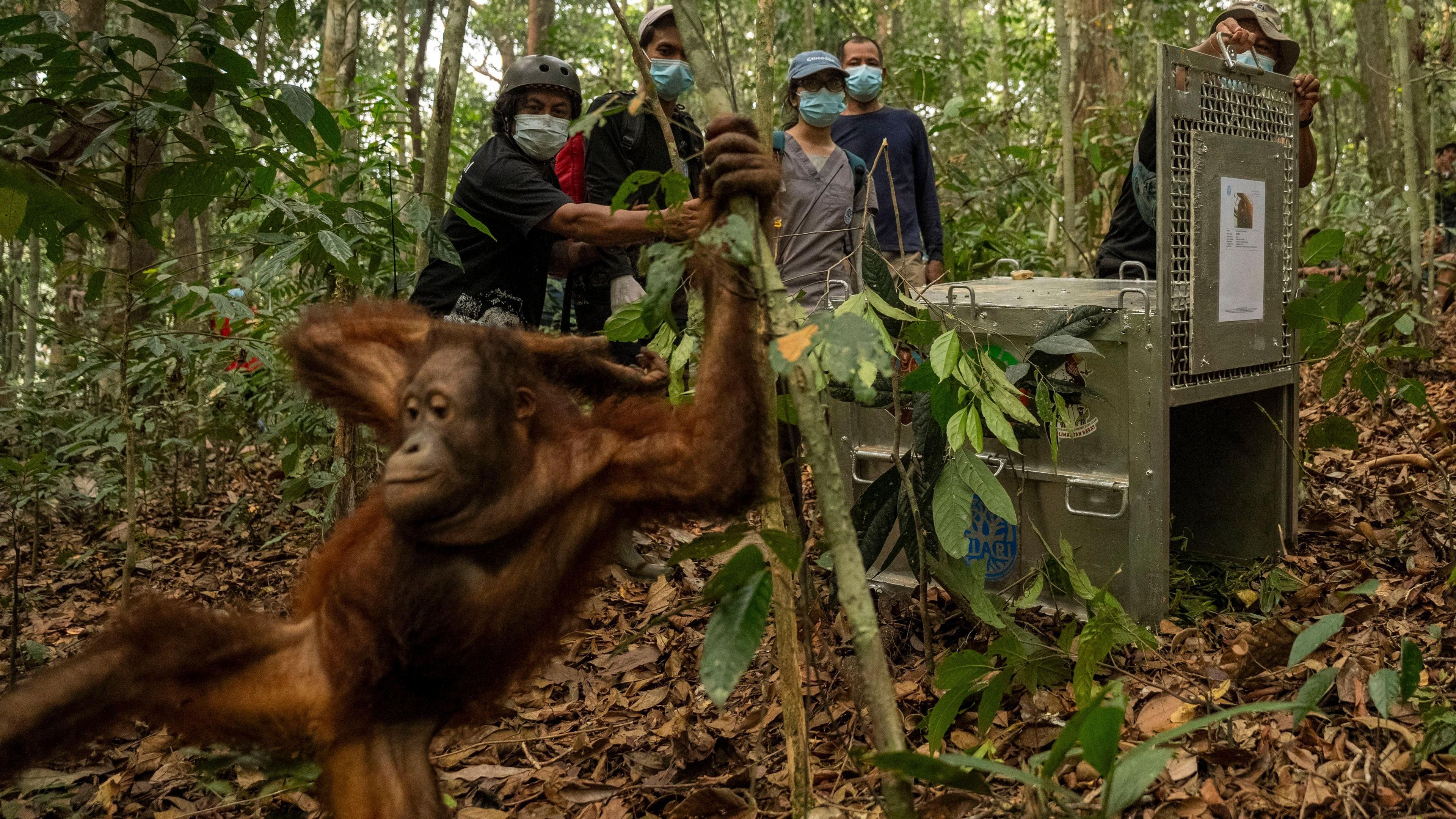
Eight orangutans have been released back into the wild in Borneo after they were taken into captivity during a summer of devastating fires.
Three mother‑offspring pairs and two adult males were moved to a forest reserve on the island’s west coast, a move announced by Indonesia’s forestry ministry and the animal‑rescue group International Animal Rescue (Yiari). The primates, all critically endangered, had been saved from burning plantations and private estates when large wildfires swept the region in August and September.
Wildfires are a regular feature of Indonesia’s dry season, but the 2026 El Niño amplified temperatures and lowered moisture levels, turning sparks into blazes that rapidly expanded. Conservation data from WWF shows Borneo’s orangutan numbers have dropped from more than 230,000 a century ago to roughly 104,000, largely due to habitat fragmentation and climate‑driven fires.
“Relocating these eight orangutans to a connected reserve was a necessary step because their original forest patches had become dangerous and food‑scarce,” said Yiari CEO Karmele Llano Sanchez. “We aim to give them a realistic chance of thriving in their natural environment.”
Other rescued groups, such as Mama Lifa and her child found amid oil palm plantations, were likewise moved to a larger, wildlife‑friendly site where they can access food, water and space. The release represents a hopeful turn in the fight against threats to Borneo’s remaining orangutan population and underscores the urgent need to address climate‑related disasters and habitat loss.


