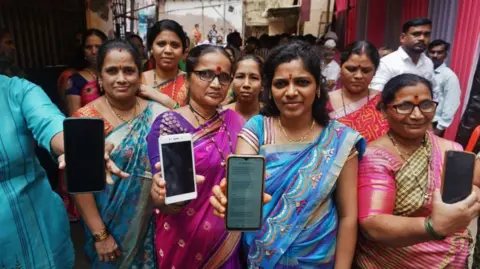
In a village in the central Indian state of Madhya Pradesh, a woman receives a small but steady sum each month—not wages for a formal job, but an unconditional cash transfer from the government.
Premila Bhalavi says the money covers medicines, vegetables, and her son's school fees. The sum, 1,500 rupees ($16: £12), may be small, but its effect—predictable income, a sense of control, and a taste of independence—is anything but.
Her story is increasingly common; across India, 118 million adult women in 12 states now receive unconditional cash transfers, leading to one of the world's largest social-policy experiments aimed at women.
Historically known for subsidizing grain, fuel, and rural jobs, India's recent move to pay women directly acknowledges their unpaid labor in households.
The unconditional cash transfers signify a significant expansion of Indian states' welfare regimes in favor of women, said Prabha Kotiswaran, a law and social justice professor.
The amounts transferred range from 1,000-2,500 rupees ($12-$30) per month, worth roughly 5-12% of household income, but they provide regular financial support. With 300 million women holding bank accounts today, managing these transfers has become more feasible.
Women generally allocate these funds to household necessities, including children’s education, groceries, cooking gas, and medical expenses, and the money arrives regardless of school attendance or household income levels.
The initiative began with states like Goa in 2013 and gained momentum around the pandemic with various regions implementing similar programs. Recent political landscapes have taken shape with cash transfers benefiting female voters, influencing recent elections, particularly in Bihar.
While some critics argue these schemes resemble vote-buying, proponents highlight their role in acknowledging women’s contributions to family economies. Nevertheless, some see the ongoing financial burden on states as a concern, with many facing revenue deficits.
Overall, experts assert the transfers' significance lies in their potential to empower and recognize women’s often-overlooked domestic and care work. Although cash transfers do not directly remedy systemic inequities, they can help strengthen women's financial independence and decision-making power in patriarchal contexts.
As India continues down this path, the future of cash transfers will hinge on effective messaging around women’s rights and the inherent value of their labor, merging these payments with equitable employment opportunities.