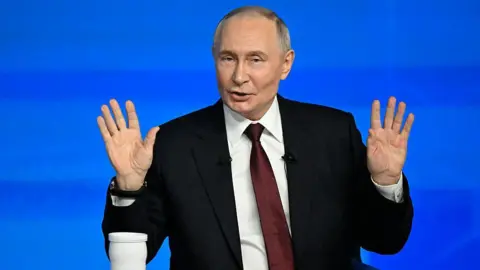
On Wednesday, over tea and cakes with veterans of the Ukraine war, President Vladimir Putin announced Russia had tested a new weapon.
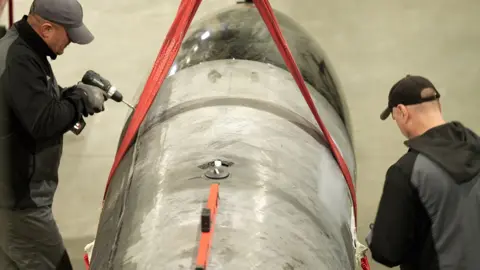
There is nothing like this, the Russian leader said of the Poseidon - a nuclear-powered, nuclear-capable underwater drone that can be fired like a torpedo. A senior Russian MP mentioned it could potentially put entire states out of operation.
Initially unveiled in 2018, the Poseidon is touted to reach speeds of 200km/h (120mph) and travel along a constantly changing route, making interception difficult. This announcement follows the testing of the Burevestnik, a nuclear-powered cruise missile deemed a unique product, unmatched in the world by Putin.
Such claims from Russia are not new; however, their military efficacy remains questionable. Mark Galeotti, a well-respected scholar on Russian affairs, labeled these weapons as Armageddon weapons, suitable for retaliatory strikes but unlikely to actually be used. The real issue is whether they are operationally feasible, he said, noting past incidents where testing resulted in failures.
Despite the heavy boasts from the Kremlin, the announcements may reflect a need to project strength amid conventional military challenges in Ukraine, where Russian forces face slow progress.
The backdrop of stalled diplomatic talks with the United States adds further complexity. With President Trump recently intensifying sanctions against Russia and hesitating on potential peace negotiations, analysts suggest that the Kremlin's announcements aim to draw attention to Moscow's military capabilities.
Ultimately, while the tests may resonate as formidable displays of strength, they may also signal Russia's desperation to assert dominance at a time when its traditional military forces are under strain.