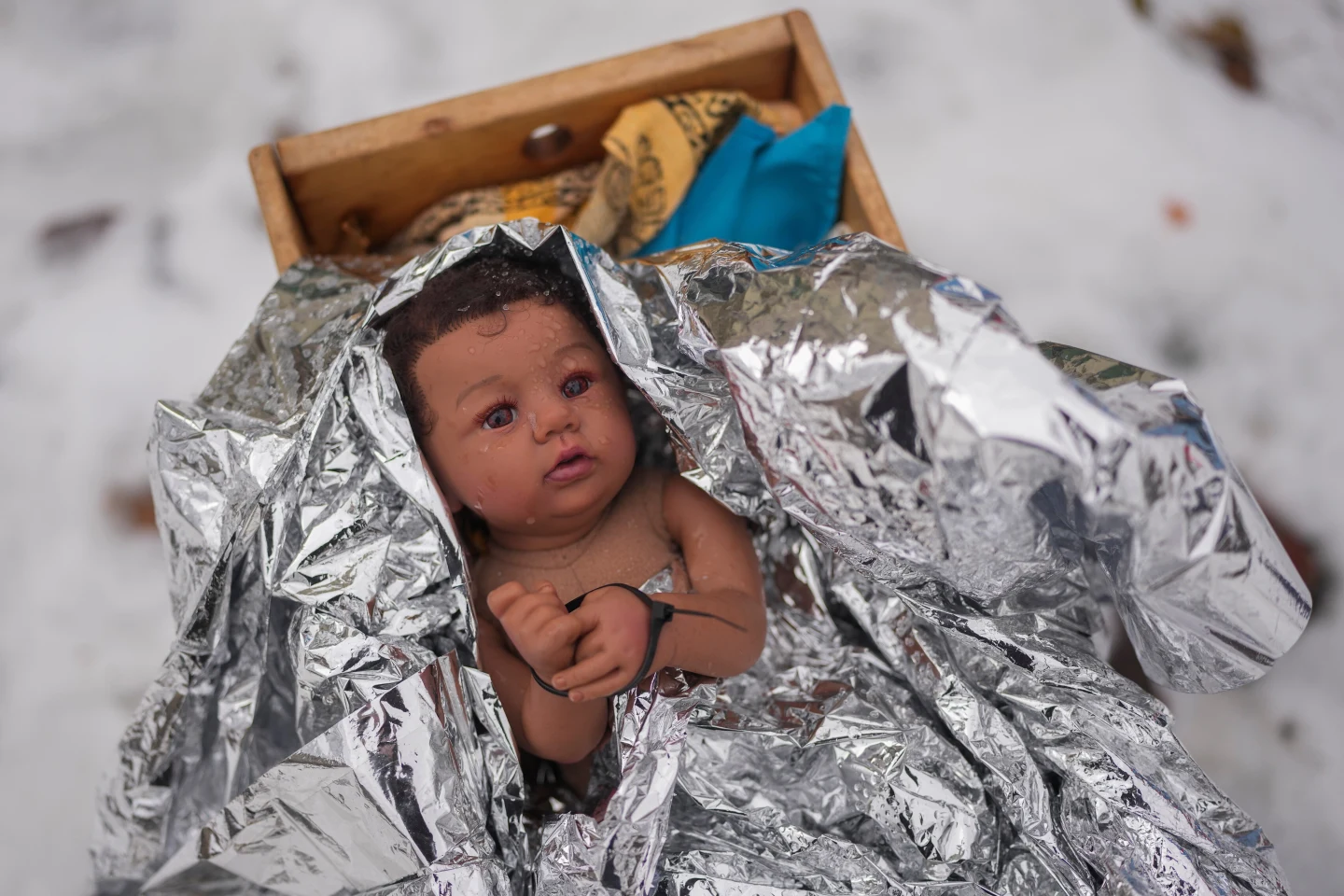
DEDHAM, Mass. (AP) — One baby Jesus lays in a manger in the snow, wrapped in a silver emergency blanket with his wrists zip-tied. Mary stands nearby outside the Lake Street Church in Evanston, Illinois, wearing a plastic gas mask and flanked by Roman soldiers in tactical vests labeled 'ICE.'
In another Chicago suburb, outside the Urban Village Church, a sign states, 'Due to ICE activity in our community the Holy Family is in hiding.' More than a thousand miles away, the Christ child has gone missing from a nativity scene at St. Susanna Parish in Dedham, Massachusetts, replaced by a sign reading, 'ICE was here.'
These modern depictions of the nativity have sparked both acclaim and anger, as churches transform a traditional Christmas tableau into a critique of U.S. immigration policies. Creators assert that this reimagining reflects the reality of many families who live in the fear of separation and deportation.
Supporters of these displays argue they align with the Bible's messages, while detractors accuse churches of using sacred imagery for political purposes, calling for punitive measures, including the loss of tax-exempt status. The archdiocese in Massachusetts demanded restoration of the nativity's 'proper sacred purpose.'
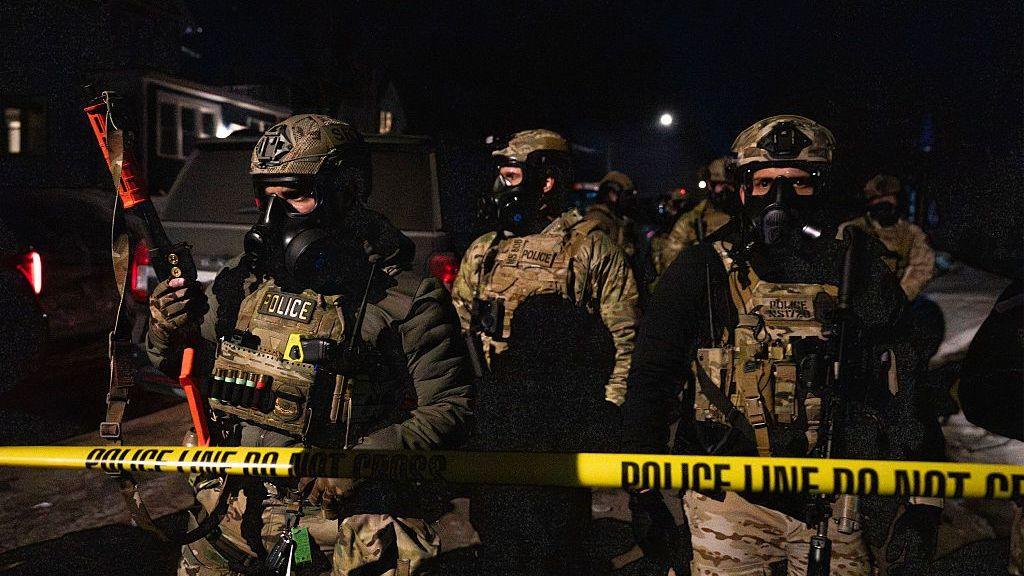
The ongoing debates arise as immigration enforcement intensifies, with recent federal arrests exceeding 2,000 individuals in Illinois and Massachusetts alone. Rev. Michael Woolf of Lake Street Church articulated that during Christmas, churches have unique opportunities to make bold statements through their public art.
Past nativity scenes have included depictions of Jesus in debris, or even in polluted waters, emphasizing concerns ranging from immigration policies to climate change. This year, criticism emerged as Archbishop Richard Henning requested the removal of controversial displays, stating parishioners expect genuine worship, not divisive political commentary.
Motioning to the ongoing atmosphere of anxiety caused by recent ICE activities, Josoma of St. Susanna's reflected on the intention behind the installation to provoke dialogue about the community's immigration struggles. Through this art, many aim to convey a poignant narrative—a reminder of the moral considerations at play amid today's polarizing immigration discourse.
Community reactions have varied widely, with some condemning the displays as inappropriate and others rallying in support. Activists emphasize the need to focus on the humanity behind immigration policy, urging congregations to reflect on the living conditions of refugees and immigrant families.
Phil Mandeville from St. Susanna's stressed the importance of the display, insisting it's a genuine reflection of their commitment to refugee support and not just a superficial stunt. He stated, 'I care more about individuals than I do a manger scene.' The church’s actions are seen as a modern interpretation of Jesus' teachings, prompting community reflection on contemporary issues of justice and compassion.
The dissent surrounding these displays underscores a larger cultural clash regarding the role of churches in addressing societal issues, highlighting the tension between faith practice and political activism as America navigates its complex immigration landscape.