
In brief
In a recent summit, Keir Starmer outlined a strategic framework aimed at ensuring Ukraine's sovereignty and security while enhancing military support and economic pressure on Russia.
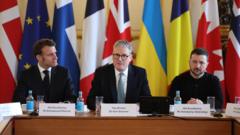
In a bold initiative, UK Prime Minister Keir Starmer has unveiled a comprehensive four-point strategy intended to secure peace and stability for Ukraine in the face of continued aggression from Russia. Following a leadership summit with 18 European heads of state, including Ukrainian President Volodymyr Zelensky, Starmer proposed the formation of a "coalition of the willing" to enhance collaborative efforts among nations, including the involvement of the United States.Starmer emphasized the significance of the moment, stating, "We are at a crossroads in history today." His remarks followed pressing discussions aimed at demonstrating European solidarity and support for Ukraine during the open conflict. President Zelensky joined in expressing appreciation for the formidable backing from European leaders, highlighting an unprecedented level of unity.Central to Starmer's plan is a commitment to maintaining military assistance to Ukraine, intensifying economic measures against Russia, ensuring any peace talks incorporate Ukrainian representation, and boosting Ukraine's defensive infrastructure. Specifically, Starmer announced an allocation of £1.6 billion ($2 billion) in UK export finance dedicated to acquiring over 5,000 air defense missiles, complementing a previous loan for military aid sourced from frozen Russian assets."We must learn from the past," Starmer asserted, cautioning against a weak settlement with Russia and advocating for a robust framework that prioritizes Ukrainian sovereignty. He noted that while the coalition would expand, the UK is ready to contribute military resources on the ground and in the air. "Europe must do the heavy lifting," he said, stressing the necessity of coordinated humanitarian efforts post-conflict.The assembly included leaders from France, Poland, Turkey, and other supportive nations, echoing a call for the immediate rearmament of Europe as articulated by European Commission President Ursula von der Leyen and echoed by NATO Secretary General Mark Rutte. After the summit, President Zelensky met King Charles III, discussing potential agreements regarding Ukraine's mineral resources with the United States. While prior negotiations faced setbacks, Zelensky expressed optimism about a potential deal contingent on peaceful resolutions with Russia, emphasizing, "The agreement that's on the table will be signed if the parties are ready."Zelensky's diplomatic journey, however, recently included a contentious meeting with US President Donald Trump, who has recently downplayed Ukraine's concerns while seeking direct negotiations with Russia. The volatility of US-Ukrainian relations highlights the complexities ahead in navigating global responses to the ongoing crisis. As nations rally together via the proposed coalition, stakeholders remain focused on establishing a meaningful resolution for Ukraine's future.