
In brief
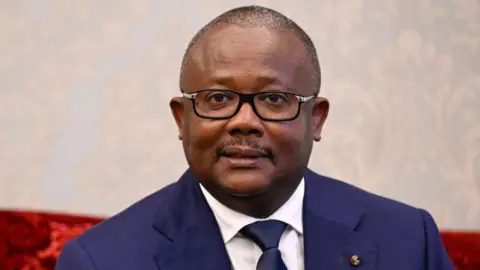
Umaro Sissoco Embaló, the ousted President of Guinea-Bissau, has fled to Senegal after being taken into custody by military forces amid a coup. The new military leadership has already sworn in General Horta N'Tam as the transitional leader for the next year. This coup coincided with the announcement of presidential and parliamentary election results, adding to the country's history of political instability. The regional bloc Ecowas is calling for a restoration of constitutional order.
Guinea-Bissau's deposed President Umaro Sissoco Embaló has arrived in neighbouring Senegal following his release by military forces that toppled his government this week, Senegal's authorities have announced.It follows negotiations by the regional West African bloc Ecowas to secure his transfer amid rising tensions in Guinea-Bissau. Senegal's foreign ministry said in a statement that Embaló had landed in the country safe and sound on a chartered military flight late on Thursday.The military in Guinea-Bissau has already sworn in a new transitional leader, Gen Horta N'Tam, who will rule the coup-prone country for a year.Wednesday's coup came a day before authorities were due to announce the provisional results of a presidential and parliamentary election. The military has suspended the electoral process and blocked the release of the results, claiming it was acting to thwart a plot by unnamed politicians supposedly linked to a well-known drug baron.In a statement, the military imposed a night-time curfew and has since detained other political figures, including Embaló's main rival, Fernando Dias.The situation remains tense with reports of soldiers patrolling the capital, Bissau, and a general ban on public protests.Gen N'Tam has stated that the military intervened to protect democracy and has reopened the country’s borders that were closed during the coup.Civil society groups and Dias contend that the coup was orchestrated by Embaló himself to evade potential defeat, citing various allegations surrounding the legitimacy of the electoral process.Ecowas has suspended Guinea-Bissau from all decision-making organs until constitutional order is restored, and the African Union and UN have voiced their condemnation, urging a return to democratic governance. With history bearing witness to at least nine coups in the last fifty years, the future of Guinea-Bissau remains uncertain.