
In brief
The Greek island of Santorini has been rattled by a series of powerful earthquakes, with a significant 5.3 magnitude tremor being the latest in a two-week wave of seismic activity. Authorities remain vigilant as thousands have departed the islands, and schools are closed in response.
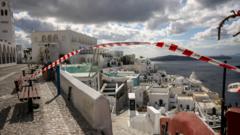
The Greek island of Santorini is enduring a wave of seismic activity, with the latest earthquake registering a powerful 5.3 magnitude. This marks the strongest quake to hit the area amidst numerous tremors recorded in the past fortnight. The tremor, occurring at a focal depth of 17km, was also felt as far away as Athens. Following a moderate 5.0 magnitude quake on Sunday, residents of neighboring Amorgos are on high alert. Santorini has seen over 12,800 earthquakes since January, with frequency escalating significantly. As the seismic activity continues, various landslides have been reported, and experts are concerned about the possibility of a major quake, even as they believe current tremors may start to subside.A state of emergency remains in effect for Santorini, extending at least until March 3. Some local residents are patrolling erosion-prone cliffs to discourage tourists from taking photos. Although inspections have indicated no building damage or injuries, over 11,000 individuals have left the islands as a precautionary measure. Schools will remain shuttered throughout Santorini, Amorgos, and other nearby islands on Monday and Tuesday. Authorities have dispatched a Special Disaster Response Unit to Amorgos, alongside teams assessing the region's electricity infrastructure. Seismologist Kostas Papazachos cautioned that the current situation may persist throughout February, while expressing hope for a gradual decline in seismic activity. Santorini's unique geological position on the Hellenic Volcanic Arc contributes to its vulnerability to earthquakes, although the recent quakes have not been linked to volcanic activity. Interestingly, the cruise ship Viking Star, en route to Santorini, adjusted its itinerary to avoid potential congestion caused by the ongoing seismic events. With Greek authorities keeping a close watch, the situation remains fluid as residents and experts seek clarity in a puzzling pattern of earthquakes.