
In brief
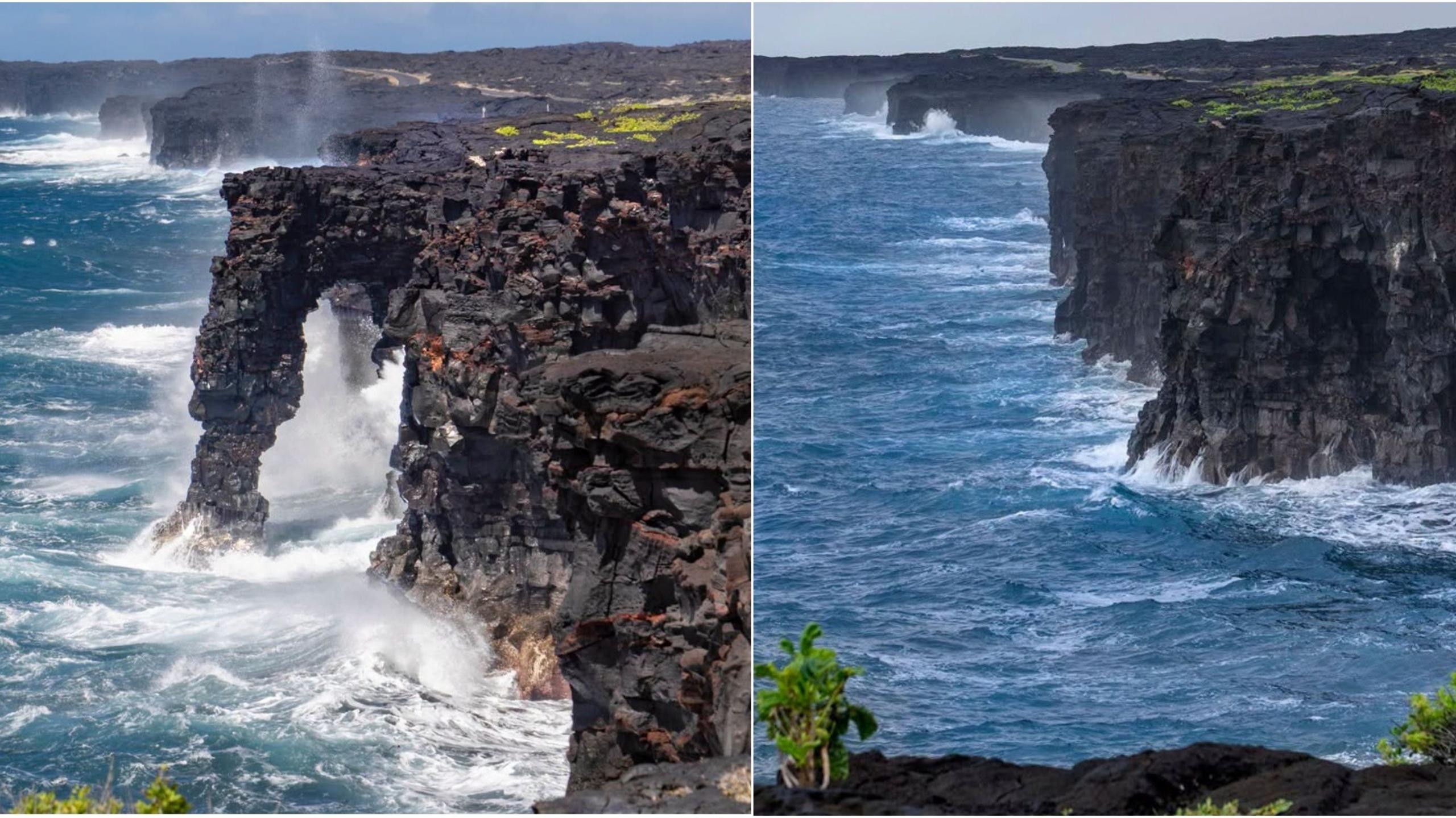
A 27‑meter high arch made of lava rock in Hawaii’s Volcanoes National Park collapsed into the Pacific Ocean in late September. The 550‑year‑old formation, once a popular tourist site, was still standing on 23 September but had disappeared by 27 September according to the National Park Service (NPS). The NPS warned in 2021 that the arch would eventually crumble, noting signs of instability in the cliffs for years and damage from the 2018 volcanic activity and storms. Social media saw thousands of visitors sharing memories as the arch faded, with many reflecting on the impermanence of natural wonders.
Hawaii’s famed Hōlei Sea Arch – a 90‑foot high lava rock formation that emerged about 550 years ago – has collapsed into the Pacific Ocean.
The exact moment of the collapse remains unknown. The arch was still projecting into the water on 23 September but was gone by 27 September, the National Park Service (NPS) said.
The NPS has warned for years that the coastline surrounding the arch was unstable. In 2021 the agency cautioned that the structure was “beautiful, but temporary,” and would crumple into the sea, only to be replaced as the cliffs slowly shifted inland.
- The formation sits at the end of Chain of Craters Road on the island of Hawaii, also known as the Big Island.
- Its collapse may have occurred during the temporary park closure for Tropical Storm Nolo later that month.
- Earthquakes from the 2018 eruption of Kīlauea, along with the summit collapse, had already damaged the cliffs in the area.
- In January 2020, new cracks led the park to close the original viewing area, opening a safer one a few months later.
- A subsequent tropical storm in late 2020 removed a chunk of rock from the arch’s base.
The disappearance of the arch has sparked an outpouring of reaction on social media. Visitors posted memories, expressed disbelief, and reflected on the fleeting nature of natural beauty:
“Nothing and no one is here forever.”
Comments underscored the shared sentiment that the arch’s loss highlights how even permanent monuments in nature are ultimately fleeting.


