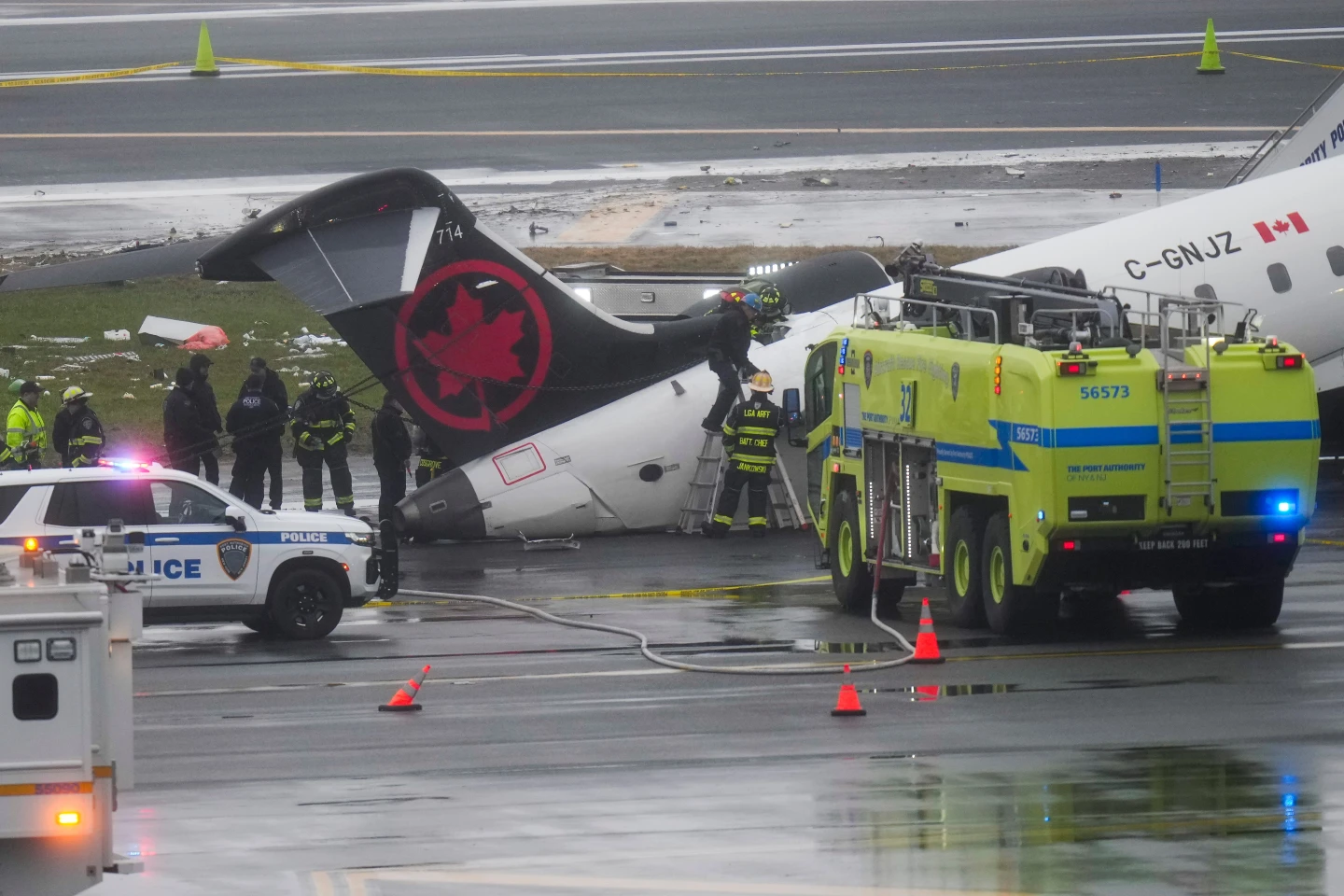
Federal investigators on Thursday detailed a series of issues and failures that led up to last month’s deadly collision between a regional jet and a fire truck at New York’s LaGuardia Airport.
According to a preliminary report from the National Transportation Safety Board, the fire truck drove through a runway's stop signal and was not equipped with a transponder, hampering an essential crash warning system. At the time, air traffic was unusually heavy due to preceding delays, complicating the controllers' tasks.
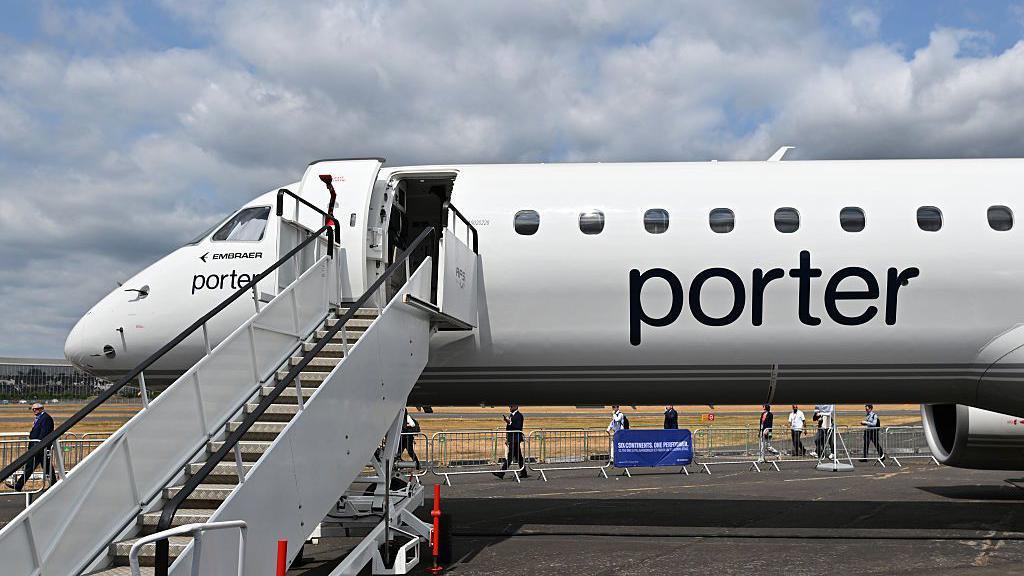
A collision occurred on March 22 when Air Canada Express Flight 8646, carrying 76 passengers, hit the fire truck mere seconds after landing. The pilots, Antoine Forest and Mackenzie Gunther, lost their lives, while many others sustained injuries.
This incident marked the first lethal crash at LaGuardia in 34 years. Here are some critical findings from the NTSB's report.
Busy Air Traffic Controllers
On the night of the crash, two air traffic controllers managed an unusually busy scenario, with the volume of arrivals and departures exceeding normal operations. They were also tasked with managing an emergency on another departing flight, straining their capacity further.
No Transponder on the Fire Truck
LaGuardia is equipped with an advanced surveillance system for tracking aircraft and ground vehicles, but the fire truck's absence of a transponder meant that the system could not track its movements accurately, leading to a convergence of targets on the radar display and potentially a missed collision warning.
Red Lights Indicated Danger
Despite the Air Canada flight being cleared to land, corresponding red lights warning of crossing traffic remained active until just moments before the crash, signaling an imminent threat. Reports indicated that the fire truck should not have crossed the runway while these lights were illuminated.
Miscommunication and Final Moments
Nine seconds before the crash, a controller realized the impending collision and urgently instructed, Stop, stop, stop., but confusion around the instructions left the fire truck operator unaware until it was too late. The truck had accelerated to 29 mph just before entering the runway.
Investigators stress the importance of comprehensive protocols and equipment, highlighting that better communication and adherence to protocols could potentially prevent future tragedies.