In brief
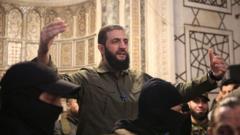
Abu Mohammed al-Jawlani, the leader of Hayat Tahrir al-Sham, has rebranded himself from his jihadist past to a more legitimate political figure in the wake of new territorial gains in Syria. Adopting his real name, he aims to garner local and international support as he navigates between militant identity and governance, facing both internal dissent and external scrutiny.
Abu Mohammed al-Jawlani, now publicly known as Ahmed al-Sharaa, has made substantial strides to reshape his image amidst the shifting landscape of the Syrian conflict. Following the recent takeover of Damascus, al-Jawlani has consciously distanced himself from the jihadist connotations of his former name in a strategic effort to enhance his legitimacy and leadership credentials. Born in 1982 in Saudi Arabia, al-Jawlani’s journey towards jihadism began in Iraq connected to al-Qaeda. He played a key role in establishing the al-Nusra Front, and later the militant group evolved, acquiring a reputation for its operational prowess. His complicated relationship with the Islamic State culminated in a public split, leading him to seek a veneer of political respectability by renaming his group Hayat Tahrir al-Sham (HTS).HTS, cemented as a leading force in the northwest rebel stronghold of Idlib, has established a quasi-government body known as the "Syrian Salvation Government." This move sought to showcase governance while navigating the complexities of local needs against a backdrop of war. Al-Jawlani has engaged in public initiatives, demonstrating stability efforts, particularly during crises such as the 2023 earthquakes.However, his ascent hasn't been without internal strife. Protests against HTS highlight accusations of authoritarian governance reminiscent of the Assad regime, while critics allege that HTS suppresses any dissent against its authority. Although HTS has made some reformative gestures, many view these as merely cosmetic.With the recent successful offensive against Assad’s regime, al-Jawlani’s position as leader has solidified, yet the challenges of reconciling his militant background with emerging political responsibilities loom large. His commitment to a moderate approach could signify a critical turning point within jihad movements, fostering a blend of pragmatism in response to evolving local and global dynamics in governance and military engagement.