
In brief
As companies across the globe dive into humanoid robotics, the landscape highlights challenges in AI, competition from Asia, and the quest for practical applications.
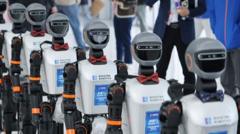
The industrial scene in Hanover, Germany, is abuzz with excitement as visitors gather around the G1 humanoid robot from Chinese company Unitree, showcased at the Hannover Messe. Standing at 4'3" (130cm), the G1 is designed to be budget-friendly while also showcasing impressive dexterity, evident in its viral dance and martial arts performances. Unitree's sales manager, Pedro Zheng, demonstrates how the G1 operates remotely, emphasizing the need for specific programming for autonomous capabilities. Unlike other more static machines, G1 interaction fosters a connection with onlookers, highlighting its human-like design.As more companies gear up to create humanoid robots, the commercial potential is enticing—it promises a workforce free from the burdens of wages and vacations and could transform daily chores at home. Nevertheless, significant hurdles remain before these machines can operate safely outside controlled factory environments. The current technological limitations in artificial intelligence prevent humanoid robots from performing complex tasks effectively, according to a Unitree spokesperson. The G1 targets research institutions and tech companies, but many entrepreneurs are still focusing on robots for more predictable environments like warehouses.Industry leader Elon Musk of Tesla is investing heavily in humanoid robotics, planning to roll out thousands of the Optimus robots within the year, aiming for them to fulfill meaningful tasks within the company's factories. In parallel, BMW has introduced humanoid robots to its US manufacturing facilities, while Hyundai has ordered a vast number from Boston Dynamics. Research analyst Thomas Andersson, who monitors 49 firms in the humanoid sector, suggests that Chinese companies may seize dominance in this market due to robust supply chains and supportive governmental infrastructure, with approximately 60% of funding for humanoid robotics flowing into Asia.Western developers face a significant challenge as they often depend on sourcing components from Asia, adding to production costs and inefficiencies. Innovator Bren Pierce has introduced the KR1 robot, designed for functionality in warehouses without the complexity of a full human form; it lacks legs but is built to accommodate flat surfaces. His strategy involves using readily available commercial technology to streamline production and keep costs manageable.The ambition to bring humanoid robots into everyday homes is met with skepticism. Despite aspirations for a universal robot, experts, including Pierce, believe mass-market integration is still 10 to 15 years away. As companies strive to simplify the usability of their robots, the vital component lies in software development, aiming for a user-friendly interface that enables mundane task completion without requiring extensive technical expertise.
