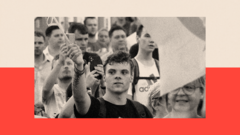
In a small bar in Freiberg, Saxony, 19-year-old Nick reflects on his desire for a peaceful country devoid of fear. As Germany approaches national elections, young men like Nick and his friend Dominic are increasingly turning towards the Alternative für Deutschland (AfD), a party that has consistently polled in second place for over a year. Their primary concern lies with immigration, particularly following violent incidents allegedly linked to asylum seekers, fuelling a narrative that positions the AfD as a stabilizing force amid their concerns.
Pew Research indicates a rising affinity for the AfD among young men: 26% of German men hold favorable views of the party, a notable increase since 2022. Within the demographic of those under 24, support for the AfD surged to 16% in recent elections, highlighting a pronounced gender divide in political alignment. This burgeoning support comes amid deepening anxiety among Germany's youth regarding economic and social stability.
AfD leaders, including Alice Weidel, often reject labels like "far-right," framing their movement instead as conservative and libertarian. This reframing appeals to many young men who feel alienated by leftist narratives surrounding equality and rights. The influence of social media platforms, such as TikTok, has proved significant, enabling the party to bypass traditional media they perceive as biased. AfD content thrives online, often resonating more with the political right.
Influencers such as Celina Brychcy, a 25-year-old TikTok creator, cater to this demographic, sharing both lifestyle and political content. She expresses a desire for greater nationalism while denying any racist intent, revealing a complex interaction with issues of identity and integration. She also aligns with sentiments against perceived "gender ideology," suggesting that many young men may feel uncomfortable with shifts towards progressive gender roles.
As fears over immigration and cultural identity rise, the normalization of far-right politics appears alarming, especially to educators like Diana Schwitalla, who combat Holocaust denial and troubling historical narratives among students. Growing discontent with traditional political structures compels young voters to support a party that promises radical change, blurring lines between protest movements and genuine support.
Looking ahead, analysts caution that as mainstream parties begin to shift their positions, the far-right may increasingly dominate the political landscape, reshaping German discourse. The AfD's commitment to issues of security and migration reflects a broader trend among young men who feel disconnected from contemporary sociopolitical dialogues. This growing alignment raises critical questions about Germany's future as it navigates its complex historical legacies.