
In brief
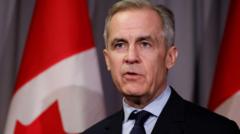
Carney emphasized that the historic alliance characterized by economic integration and security is now in jeopardy, advocating for a reimagined Canadian economy in reaction to new tariffs imposed by the U.S. on imported vehicles. Following a recent cabinet meeting, Carney expressed that Canada's old bond with the United States is essentially "over." This remark comes amid escalating tensions as President Trump rolls out a 25% tariff on imported cars and parts, prompting Canada to devise retaliatory measures aimed at making a substantial impact on U.S. interests.
In his statement, Carney characterized the automotive agreement established in 1965 as foundational to U.S.-Canada relations, now rendered obsolete by current tariff policies. He urged that Canada can adapt its auto manufacturing sector to thrive despite these trade barriers if there is a concerted effort from both government and industry.The backdrop of this conflict reveals that the U.S. has already imposed a general 25% tariff on an array of Canadian goods, backed by an extensive $60 billion in retaliatory tariffs from Canada directed at U.S. imports. Carney took urgency over the matter ahead of the forthcoming general elections and confirmed an anticipated call with President Trump, which would mark their inaugural direct dialogue on trade concerns.The recent decision has provoked debates, with opposition leader Pierre Poilievre denouncing the tariffs as “unjustified.” Additionally, NDP leader Jagmeet Singh criticized the U.S. stance as an “illegal trade war,” asserting protection for Canadian jobs and calling out the ramifications on the automotive workforce.As the political landscape evolves, the implications of these trade decisions will be critical for both nations, especially with Canadians preparing for elections on April 28. The outcome will hinge on the government's ability to sustain its automotive sector and navigate new tariffs that threaten to disrupt long-established trade relationships.Meanwhile, Mexico's response remained measured as President Claudia Sheinbaum noted the importance of protecting domestic jobs in light of these trade tensions, reaffirming a commitment to defend against any negative fallout from U.S. tariffs.As the trade war heats up, the once seamless cooperation between Canada and the U.S. is now fraught with challenges, compelling leaders to strategize for a more independent economic future.

