LOS ANGELES (AP) — Peter Arnett, the Pulitzer Prize-winning reporter who spent decades dodging bullets and bombs to bring the world eyewitness accounts of war from the rice paddies of Vietnam to the deserts of Iraq, has died at 91.
Arnett, who won the 1966 Pulitzer Prize for international reporting for his Vietnam War coverage for The Associated Press, died Wednesday in Newport Beach and was surrounded by friends and family, said his son Andrew Arnett. He had entered hospice on Saturday while suffering from prostate cancer.
As a wire-service correspondent, Arnett was known mostly to fellow journalists when he reported in Vietnam from 1962 until the war’s end in 1975. He became something of a household name in 1991, however, after he broadcast live updates for CNN of the first Gulf War.
While almost all Western reporters had fled Baghdad in the days before the U.S.-led attack, Arnett stayed. As missiles began raining on the city, he broadcast a live account by cellphone from his hotel room.
“There was an explosion right near me, you may have heard,” he said in a calm, New Zealand-accented voice moments after the loud boom of a missile strike rattled across the airwaves. As he continued to speak air-raid sirens blared in the background.
“I think that took out the telecommunications center,” he said of another explosion. “They are hitting the center of the city.”
Combat in Vietnam
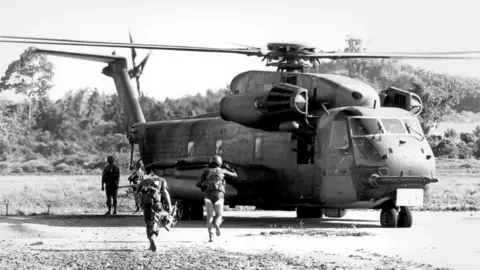
In January 1966 he joined a battalion of U.S. soldiers seeking to rout North Vietnamese snipers and was standing next to the battalion commander when the soldier paused to read a map.
“As the colonel peered at it I heard four loud shots as bullets tore through the map and into his chest, a few inches from my face,” Arnett recalled during a talk to the American Library Association in 2013. “He sank to the ground at my feet.”
He would mark the fallen soldier’s obituary with, “He was the son of a general, a West Pointer and a battalion commander. But Lt. Colonel George Eyster was to die like a rifleman.”
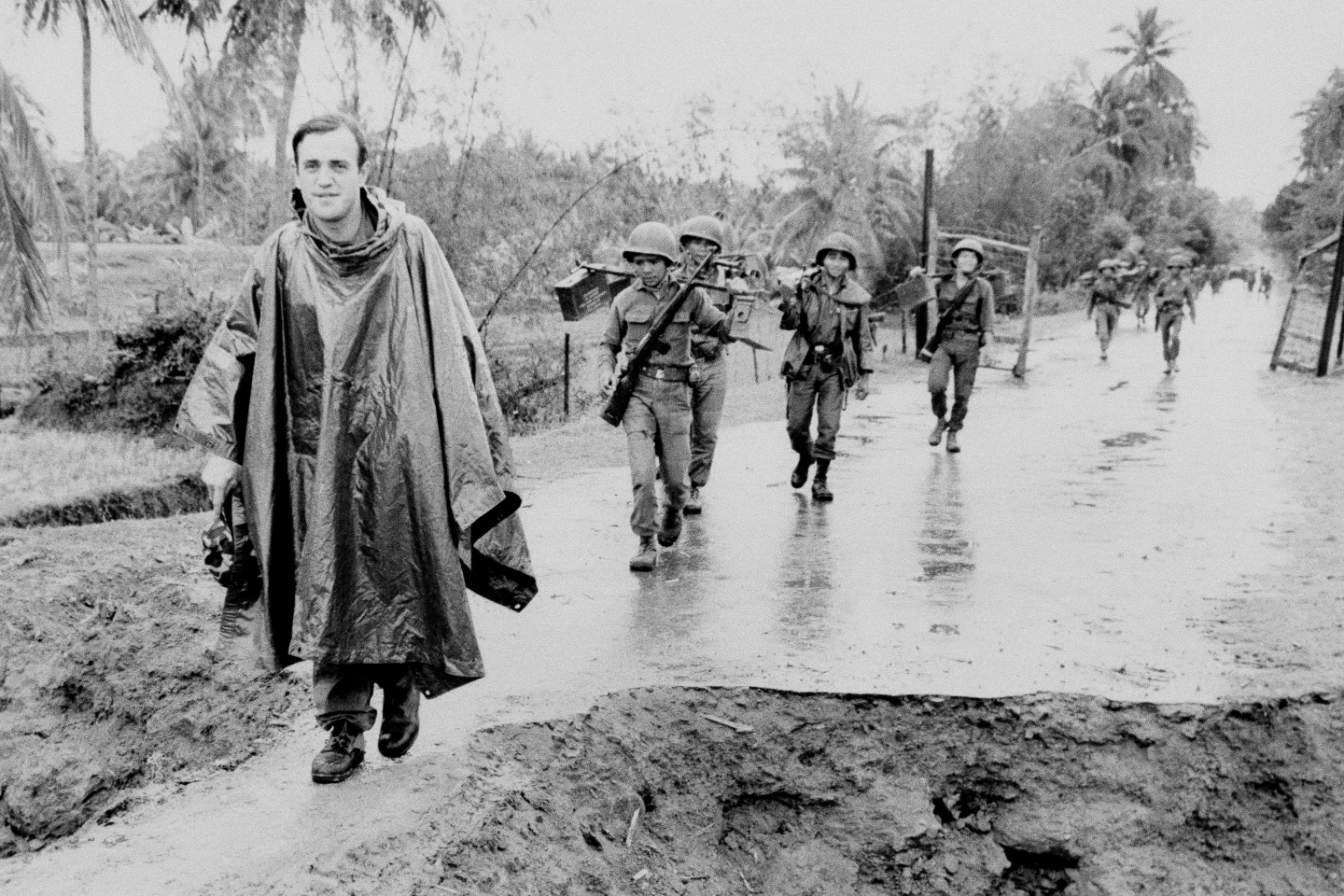
Arnett arrived in Vietnam shortly after joining The Associated Press and would remain there until Saigon fell in 1975.
After the war, he joined CNN in 1981, reporting from war zones and conducting exclusive interviews in tumultuous times. He published his memoir in 1995, detailing his experiences.
Despite controversies that marred parts of his career, including his firing from CNN in 1999 and a tumultuous period during the second Gulf War, Arnett continued his reporting endeavors across international platforms.
Arnett is survived by his wife, Nina Nguyen, and their children, Elsa and Andrew.