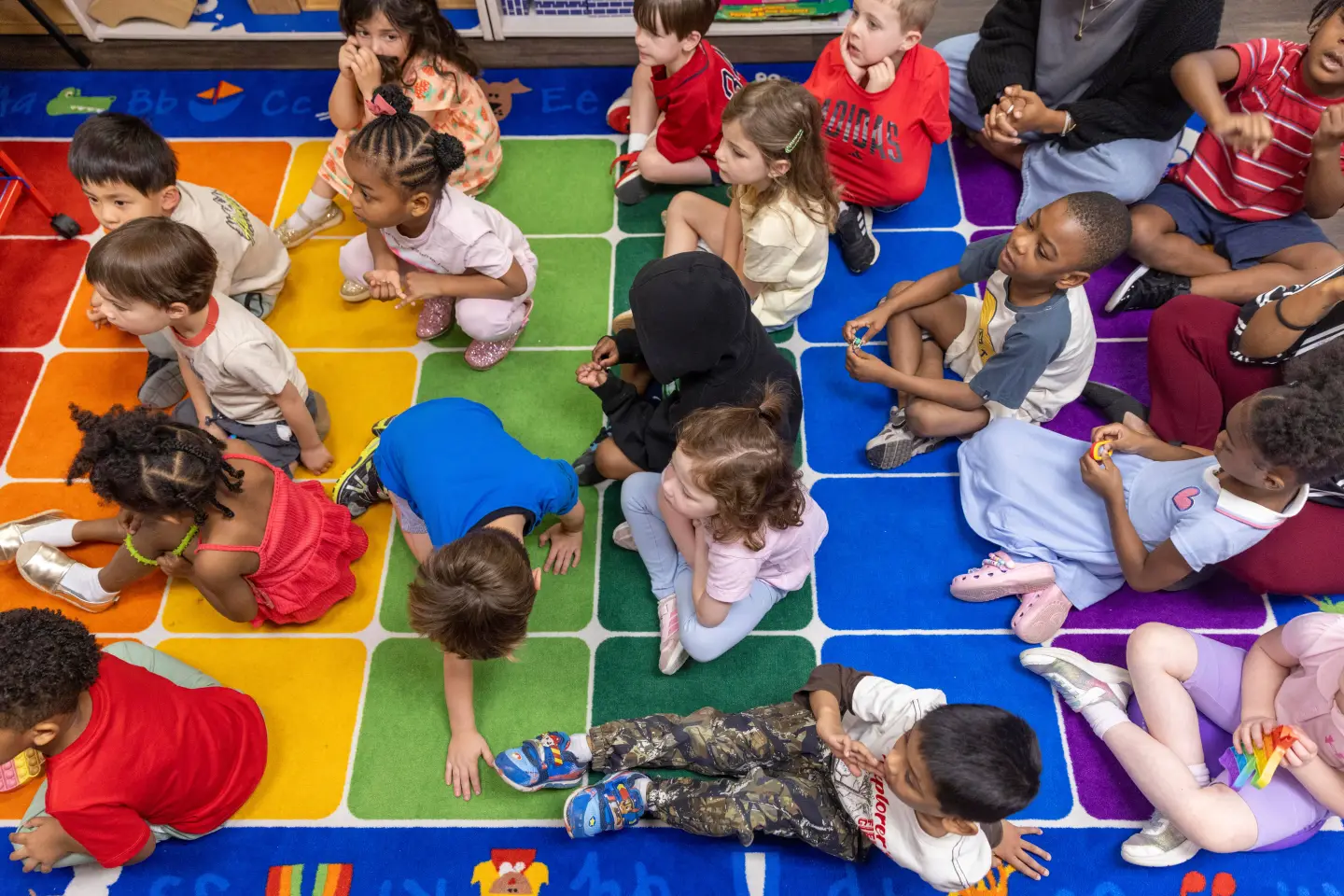
Enrollment in state-funded preschools across the United States hit a record high of 1.8 million children last year, thanks to considerable investments amounting to $14.4 billion and an increasing number of states adopting universal preschool programs.
According to a report published by the National Institute of Early Education Research, this increase translates to approximately 37% of four-year-olds and nearly 10% of three-year-olds enrolled in funded preschool programs. The total rise of 44,000 students indicates a growing recognition of the importance of early childhood education.
However, the report cautioned that while some states are making advancements, access remains highly uneven across the country. If providing high-quality preschool education to all 3- and 4-year-olds were a race, some states are nearing the finish line, others have stumbled, and a few have yet to leave the starting line, the authors noted.
California, which introduced a transitional kindergarten program making preschool accessible to every four-year-old, accounted for over half of the national enrollment gain. However, challenges loom as the state struggles to meet key quality benchmarks.
In stark contrast, some areas like Hawaii manage to meet all the quality indicators but serve only about 10% of its four-year-olds. The layering of different preschool offerings underscores the discrepancies; families in states lacking funding may find themselves facing long waitlists for limited slots.
Despite the challenges, the evidence supporting the long-term benefits of quality preschool education continues to grow, indicating it plays a crucial role in children's readiness for school and future success.