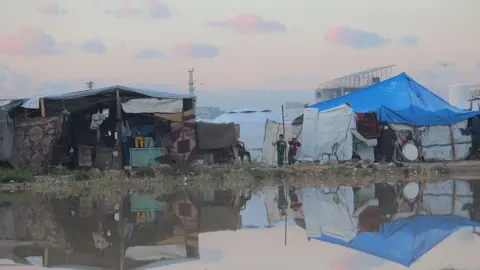
Heavy rains over the past week have compounded the already dire living conditions of the hundreds of thousands of displaced Palestinians in the Gaza Strip, UN agencies say.
Unicef spokesman Jonathan Crickx told the BBC that the weather overnight had been horrendous, with the rain so intense that he had seen up to 15cm (6in) of water on the ground near his office.
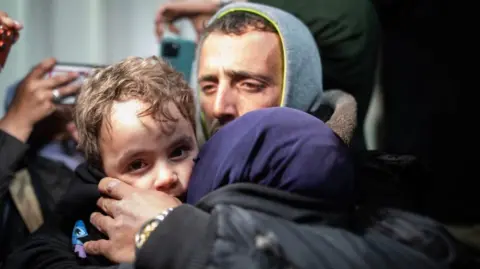
He said he was extremely concerned that children living in tents and makeshift shelters in wet clothing would succumb to hypothermia and other illnesses.
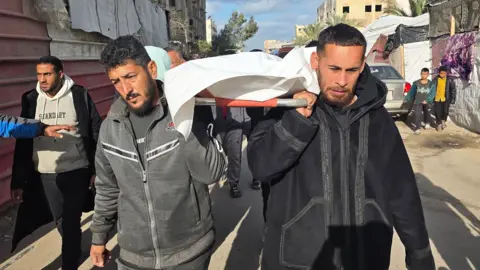
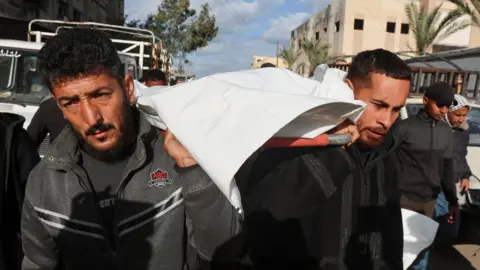
Gaza's Hamas-run health ministry has said one baby has died from hypothermia and at least 11 other people have died in building collapses caused by the severe weather.
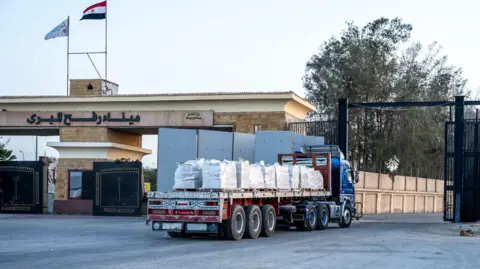
UN agencies have stepped up deliveries of tents, blankets and clothes since the Gaza ceasefire began nine weeks ago, but they have said there is still not enough aid getting in.
The UN and its partners estimate that almost 55,000 families have so far been affected by the rains, with their belongings and shelters damaged or destroyed.
More than 40 designated emergency shelters were severely flooded following downpours on Monday and Tuesday, forcing many people to relocate again. Jonathan Crickx, chief of communications for Unicef State of Palestine, described the situation as dire, with many families attempting to remove water from their homes with buckets.
Last night was really horrendous for the families. The heavy rains were so intense that we could see... 10cm, 15cm (4-6in) of water at some point, he reported.
Sadly, the challenges are compounded by low nighttime temperatures, and aid delivery remains insufficient to meet the immediate and long-term needs of the affected families. Until more substantial support arrives, many—especially the vulnerable, such as children—are left grappling with the cold and hazardous living conditions.
Unicef spokesman Jonathan Crickx told the BBC that the weather overnight had been horrendous, with the rain so intense that he had seen up to 15cm (6in) of water on the ground near his office.
He said he was extremely concerned that children living in tents and makeshift shelters in wet clothing would succumb to hypothermia and other illnesses.
Gaza's Hamas-run health ministry has said one baby has died from hypothermia and at least 11 other people have died in building collapses caused by the severe weather.
UN agencies have stepped up deliveries of tents, blankets and clothes since the Gaza ceasefire began nine weeks ago, but they have said there is still not enough aid getting in.
The UN and its partners estimate that almost 55,000 families have so far been affected by the rains, with their belongings and shelters damaged or destroyed.
More than 40 designated emergency shelters were severely flooded following downpours on Monday and Tuesday, forcing many people to relocate again. Jonathan Crickx, chief of communications for Unicef State of Palestine, described the situation as dire, with many families attempting to remove water from their homes with buckets.
Last night was really horrendous for the families. The heavy rains were so intense that we could see... 10cm, 15cm (4-6in) of water at some point, he reported.
Sadly, the challenges are compounded by low nighttime temperatures, and aid delivery remains insufficient to meet the immediate and long-term needs of the affected families. Until more substantial support arrives, many—especially the vulnerable, such as children—are left grappling with the cold and hazardous living conditions.