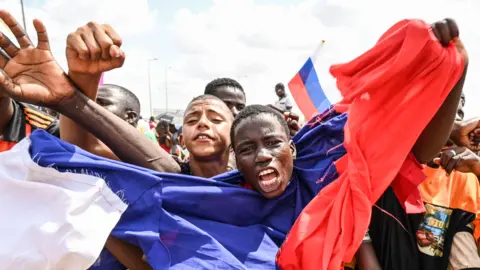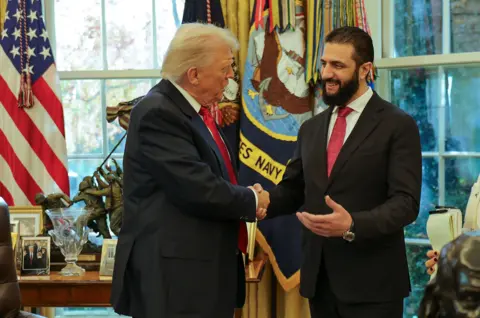
A year ago, the war that President Bashar al-Assad seemed to have won was turned upside down. A rebel force had broken out of Idlib, a Syrian province on the border with Turkey, and was storming towards Damascus. It was led by a man known as Abu Mohammed al-Jolani, and his militia group, Hayat Tahrir al-Sham (HTS). One year later, he is interim president, and Bashar al-Assad is in a gilded exile in Russia.
Syria is still in ruins. In every city and village visited, people are living in skeletal buildings gutted by war. But despite the new problems, it feels much lighter without the crushing, cruel weight of the Assads.
Sharaa has found the going easier internationally than at home, as he has won the argument with Saudi Arabia and the West that he is Syria's best chance for a stable future. His appointment marks a substantial shift from the previous regime, yet the shadows of conflict linger. People are wary of the sectarian divisions and the need for reconstruction, with no established rebuilding fund in sight.
The economic conditions are beginning to improve slowly, with business deals in the pipeline. However, without resolving sectarian tensions, the specter of violence remains a prominent threat. As calls for peace grow louder, many Syrians remain deeply concerned about their safety and future—expressing a desire to live free from fear, in a country still grappling with the vestiges of conflict.
Syria is still in ruins. In every city and village visited, people are living in skeletal buildings gutted by war. But despite the new problems, it feels much lighter without the crushing, cruel weight of the Assads.
Sharaa has found the going easier internationally than at home, as he has won the argument with Saudi Arabia and the West that he is Syria's best chance for a stable future. His appointment marks a substantial shift from the previous regime, yet the shadows of conflict linger. People are wary of the sectarian divisions and the need for reconstruction, with no established rebuilding fund in sight.
The economic conditions are beginning to improve slowly, with business deals in the pipeline. However, without resolving sectarian tensions, the specter of violence remains a prominent threat. As calls for peace grow louder, many Syrians remain deeply concerned about their safety and future—expressing a desire to live free from fear, in a country still grappling with the vestiges of conflict.