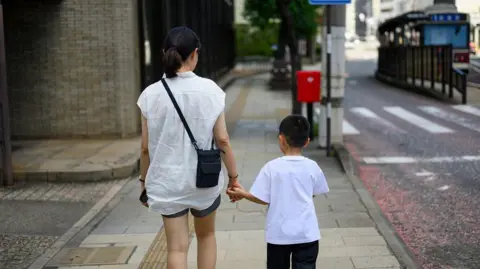
Last year, more than 18,000 older people living with dementia left their homes and wandered off in Japan. Almost 500 were later found dead.
The police report that such cases have doubled since 2012, underscoring a growing strain on the world's oldest society.
The crisis is compounded by a shrinking workforce and limited foreign caregivers. The Japanese government has identified dementia as an urgent policy challenge, estimating dementia-related health and social care costs will reach 14 trillion yen ($90bn; £67bn) by 2030, up from nine trillion yen in 2025.
In response, there is a shift toward technology to manage this pressing issue.
Across Japan, GPS-based systems are being integrated to track individuals who wander. Some regions are employing wearable GPS tags that alert authorities if a person leaves a designated area. Convenience-store employees in some towns receive real-time notifications, creating a community safety network to locate missing individuals swiftly.
Robot Caregivers and AI
Technologies are also evolving to aid in the earlier detection of dementia. Fujitsu's aiGait utilizes AI to analyze posture and walking patterns, identifying early signs of dementia.
Meanwhile, researchers from Waseda University are developing AIREC, a humanoid robot designed to assist with caregiving tasks such as dressing and meal preparation.
Existing robots are already supporting care homes by engaging residents with music and basic stretching exercises, as well as monitoring patients overnight. Despite developments, experts remain cautious—full human-robot interaction capable of providing extensive care may take years to realize.
Poketomo, a small robot designed for companionship, assists users with medication reminders and social interaction, illustrating the push towards emotional support in technology.
However, while devices and robots are worthy allies, the irreplaceable value of human interaction remains clear. Robots should supplement, not substitute, human caregivers, affirms Assistant Professor Tamon Miyake.
The Restaurant of Mistaken Orders in Tokyo offers insight into the importance of human connection by allowing dementia patients to engage in meaningful social work, illustrating a holistic approach to dementia care combining technology with community support.