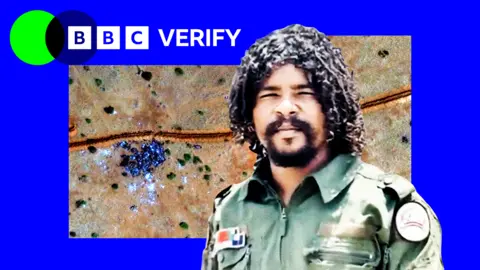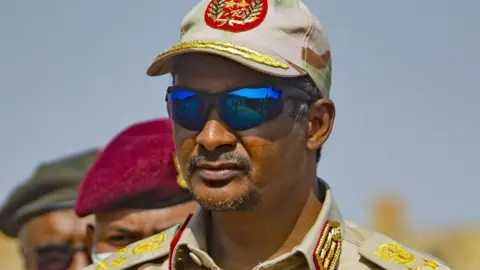
Mohamed Hamdan Dagolo, known as 'Hemedti', has emerged as a dominant figure on Sudan's political stage, with his paramilitary Rapid Support Forces (RSF) now controlling half of the country.
The RSF scored a notable victory recently when it overran the city of el-Fasher, the last garrison held by the Sudanese army and its local allies in the western region of Darfur.
Feared and loathed by his adversaries, Hemedti is admired by his followers for his tenacity, ruthlessness, and his promise to tear down a discredited state.
Hemedti has humble origins. His family is from the Mahariya section of the camel-herding, Arabic-speaking Rizeigat community that spans Chad and Darfur.
After dropping out of school in his early teens, Hemedti earned money trading camels across the desert to Libya and Egypt.
Hemedti's rise to power is marked by a history of violence and opportunism. His units were linked to the notorious Janjaweed militia during the height of the Darfur conflict, which led to allegations of genocide being leveled against them.
As he consolidated power, Hemedti took control of Sudan's gold export industry through his family company, Al-Gunaid, becoming the chief gold exporter in Sudan.
Despite Hemedti's growing influence, he has faced significant challenges, entering a power struggle with the Sudanese army and managing accusations of human rights abuses amid ongoing violence in Darfur.
The RSF, under Hemedti's command, is increasingly locked in a conflict that has resulted in thousands of civilian deaths, as it seeks to enforce its control over the region amidst a backdrop of international condemnation and scrutiny.
As the war rages on, with mass killings and atrocities reported, Hemedti remains a pivotal player in Sudan's complex political landscape, potentially eyeing a future where he can dictate the course of the troubled nation's destiny.