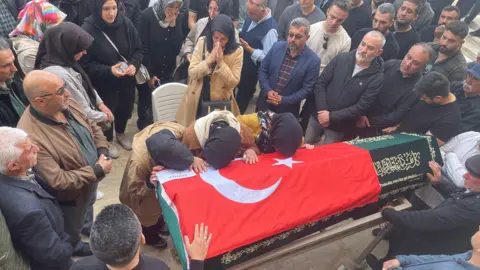
Outside a morgue in south-eastern Turkey, a funeral unfolds as dozens rush to carry the coffin of a 10-year-old boy, a representative of the young lives cut short in a harrowing school shooting that has shaken the nation. On the same day, his grieving father echoed despair and anguish, lamenting the loss of his child, one among eight shot dead during a tragic event at a local school. This act of violence, perpetrated by a fellow 14-year-old student, marks Turkey's first deadly mass school shooting—an event that has left an indelible scar on the heart of this normally peaceful nation.
As community members gather for the funerals, emotional scenes unfold. Coffins wrapped in the Turkish flag symbolize the national mourning, while harsh criticisms erupt from relatives aimed at the police's delayed response. Too late, too late, shouted one woman, seething with anger and grief as she questioned why help came only after it was too late for the children.
Among the fallen was a young girl named Zeynep, whose mother hugged her coffin tightly, remembering how she was a bright, respectful child whose laughter had filled their home. She became an angel and flew away, her uncle mourned, voicing a dire call for better security in schools to prevent such tragedies from reoccurring.
The attacks come just a day after another shooting incident in a nearby school, leaving the community and authorities in shock. Prof. Asli Carkoglu, a psychologist, raised concerns that such violent acts might inspire copycats, particularly among frustrated youth. While previous school violence in Turkey has existed, the introduction of firearms takes the threat to an alarming new level.
Amidst ongoing investigations, authorities detain individuals related to social media discussions tied to the shootings, emphasizing a crackdown on potential misinformation. Initial findings suggest that the shooter acted alone, with no affiliations to terrorist groups, focusing the narrative on addressing the growing mental health issues within the youth and the ease of access to weapons from within homes.
As the narratives unfold, Turkey grapples with what has quickly become a national conversation about safety in schools, the implications of access to firearms, and the societal impact of violence among the younger population.
As community members gather for the funerals, emotional scenes unfold. Coffins wrapped in the Turkish flag symbolize the national mourning, while harsh criticisms erupt from relatives aimed at the police's delayed response. Too late, too late, shouted one woman, seething with anger and grief as she questioned why help came only after it was too late for the children.
Among the fallen was a young girl named Zeynep, whose mother hugged her coffin tightly, remembering how she was a bright, respectful child whose laughter had filled their home. She became an angel and flew away, her uncle mourned, voicing a dire call for better security in schools to prevent such tragedies from reoccurring.
The attacks come just a day after another shooting incident in a nearby school, leaving the community and authorities in shock. Prof. Asli Carkoglu, a psychologist, raised concerns that such violent acts might inspire copycats, particularly among frustrated youth. While previous school violence in Turkey has existed, the introduction of firearms takes the threat to an alarming new level.
Amidst ongoing investigations, authorities detain individuals related to social media discussions tied to the shootings, emphasizing a crackdown on potential misinformation. Initial findings suggest that the shooter acted alone, with no affiliations to terrorist groups, focusing the narrative on addressing the growing mental health issues within the youth and the ease of access to weapons from within homes.
As the narratives unfold, Turkey grapples with what has quickly become a national conversation about safety in schools, the implications of access to firearms, and the societal impact of violence among the younger population.