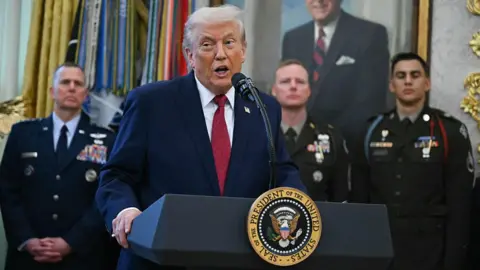
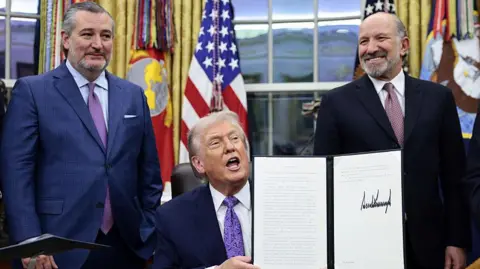
In the heart of Solihull, a market town in England's West Midlands, the local economy is largely supported by Jaguar Land Rover (JLR), one of Britain's largest car manufacturers. The factory, sprawling over a vast area, might not loom large over the town, but its presence certainly dominates the livelihood of many. With approximately 9,000 employees directly at JLR and countless contractors relying on the plant, the recent announcement of a 25% tariff on imported vehicles by President Trump has sent ripples of anxiety through this community of around 218,000.
Despite the brief pause on reciprocal tariffs recently declared, the effects of the new trade policy have already begun to materialize. JLR has responded to the tariffs by halting shipments of cars bound for the U.S. for the month of April, following a trend that sees a significant portion of its export market in America. Just last year, the company exported around 38,000 vehicles to the States during the third quarter alone.
Local residents are feeling the tension vividly. Ben Slade, a 42-year-old local, expressed his family's concern over the situation. His brother-in-law works at the JLR plant and is among many facing uncertainty. "It’s just a very nervy time for my sister," Slade remarked, emphasizing that while some are trying to cope with humor, the underlying anxiety is palpable.
As the community braces for the potential fallout from the tariffs, it remains to be seen how JLR's decisions will affect jobs and the economy of Solihull in the long run.