
In brief
After a meeting between Venezuela’s interim president Delcy Rodríguez and U.S. President Donald Trump, human rights groups say dozens of political prisoners were released. The freed detainees include former opposition figures and those jailed on allegations of plotting against ex‑President Maduro. The release follows a broader “prisoner‑release” scheme that has slowed since a 2024 government decision to end it. Despite the releases, opposition and rights groups insist the political justice system remains a tool of repression and demand swift, free elections.
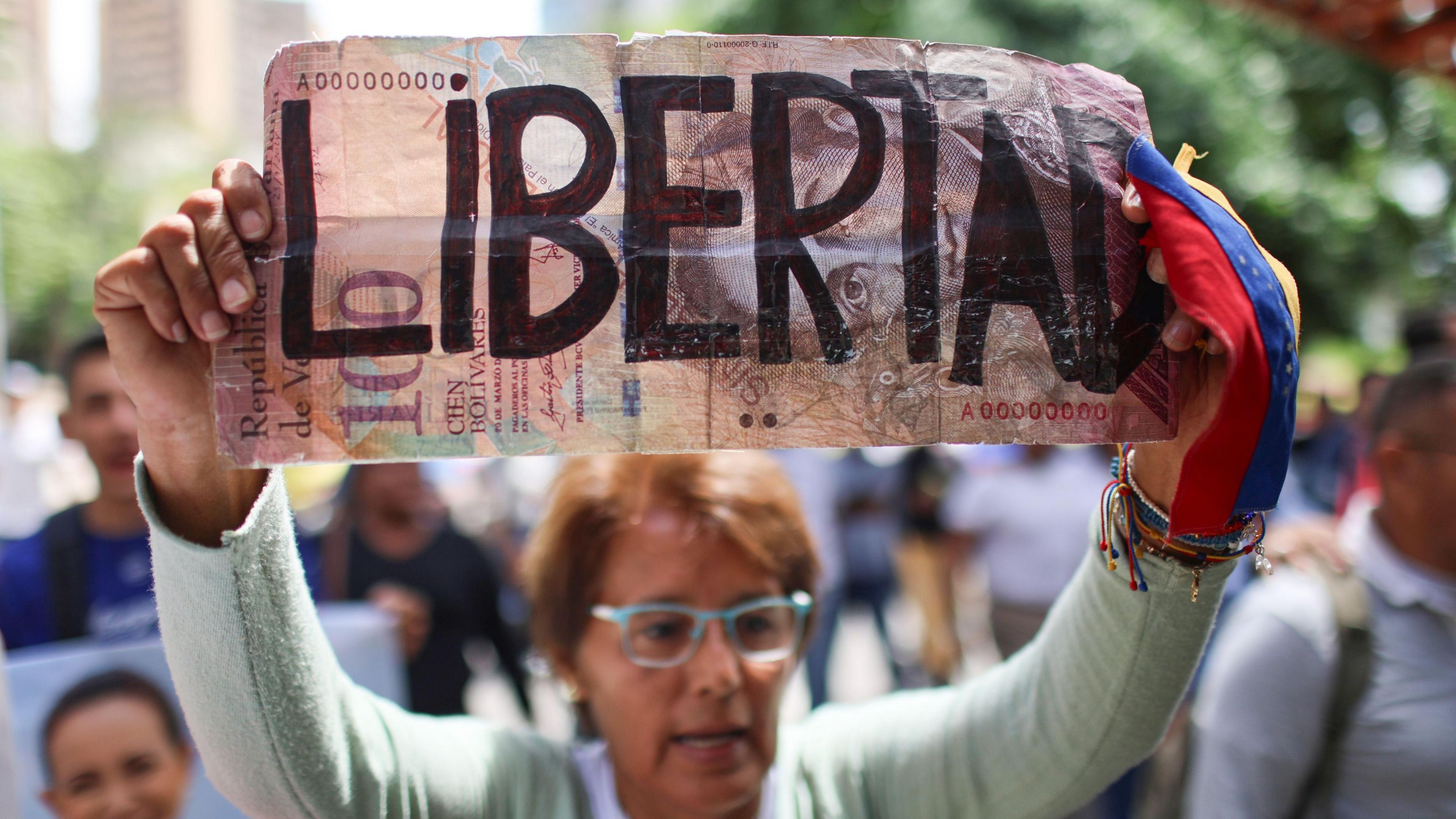
Pictured: A protester holds a sign calling for free elections in Caracas.
Venezuela has released dozens of political prisoners, human rights groups say, following a meeting between interim President Delcy Rodríguez and U.S. President Donald Trump.
Among those freed in the early hours of Saturday morning was Wilder Vasquez, who received a five‑year sentence in 2018 on allegations that he plotted to kill former President Nicolás Maduro.
The releases come after Rodríguez had met Trump at the United Nations General Assembly in New York, an engagement that has intensified opposition calls for free elections.
While the interim administration had previously freed hundreds of inmates as part of a reconciliation effort, the program slowed in April when Rodríguez announced it was coming to an end.
Venezuela has not issued a statement on the latest releases, nor clarified whether they were a direct result of the U.S. meeting.
Foro Penal, a rights group, reported that both Miguel Castillo Cedeño and Frank Cabañas were among those released; each had faced extended imprisonment on politically sensitive charges.
Critics argue that Maduro’s government historically used arbitrary detention to silence dissent and silence critics, a tactic that persists under the interim administration.
Rodríguez has positioned her government as more open to political dissent while seeking U.S. approval, a stance that has drawn attention to her prisoner‑release scheme as a key concession to Washington.
However, activists say the program was halted with less than half of the country's political prisoners freed, and they continue to call for a genuine democratic transition.
In the wake of the release, the U.S. has maintained a focus on encouraging elections, while Venezuelan officials continue to deny that dissidents are unlawfully imprisoned.
