In brief
Following the Jeju Air crash in South Korea, victims' families have experienced intense online harassment, with accusations of them being "fake bereaved" and malicious jokes circulating. Experts attribute this to societal pressures and economic envy, as authorities work to remove the hate speech.
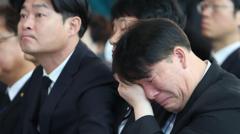
In December, a devastating plane crash in South Korea transformed 22-year-old Park Guen-woo into an orphan after he lost both his parents. As he struggled to process his grief, he was confronted by a wave of online hate, including conspiracy theories and derogatory jokes aimed at the victims of the Jeju Air tragedy. The aircraft, which was returning from Bangkok, crashed at Muan International Airport on December 29, resulting in the death of 179 of the 181 people onboard.In response to the online vitriol, police have apprehended eight individuals suspected of posting defamatory remarks, including claims that the bereaved families were eager to collect compensation or were "fake victims." Authorities have also removed over 427 harmful posts, but this incident is not isolated. Experts highlight an alarming trend in South Korea, where bereaved families frequently become targets of online harassment. Following the tragic Halloween crowd crush in 2022, victims faced similar hostility, with one bereaved father's image altered to depict him laughing post-compensation. The families of victims from the 2014 Sewol ferry disaster also experienced sustained attacks, fueled by resentment over government compensation payouts.Society's economic struggles and increased competitiveness have intensified these issues, according to Koo Jeong-woo, a sociology professor at Sungkyunkwan University. He explained that many South Koreans perceive others as adversaries in a harsh social landscape, leading to a culture of comparison that fosters hate speech.Mr. Park has faced hateful accusations that families are exploiting their grief for financial gain, as illustrated by comments made after an emergency relief fund was established for those affected. The suggestion that they are thriving on tragedy adds another layer of distress. "Every single one of those comments cuts us deeply," he says, emphasizing their grief rather than profit.Joshua Uyheng, a psychology expert, noted that people often project their frustrations onto those they believe are gaining an advantage from tragedy. The context of the crash further complicated reactions, arising during a politically charged period in South Korea, with unfounded blame placed on the opposition Democratic Party for the disaster.Park Han-shin, whose brother also perished in the crash, revealed that he was labeled a political supporter of the Democratic Party and a "fake" bereaved family member. Such unfounded claims have even compelled his daughter to speak out on social media, expressing deep concern for her father's emotional well-being.Despite the pervasive hate, experts suggest that social media companies need clearer policies against hate speech and greater accountability for online behavior. Encouraging users to report malicious content and ensuring prompt deletion may alleviate some of the online abuse.Lastly, fostering a sense of shared humanity can help combat this culture of hate. According to Prof. Uyheng, understanding tragedies as collective concerns can promote empathy for victims, moving society away from vitriol towards compassion.