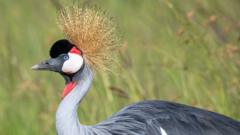
The majestic crested crane, recognized for its striking golden crown and red throat pouch, is a treasured symbol of Uganda, prominently featured on the national flag and coat of arms. Known for its graceful presence, which has inspired the names of various national teams, the crane now faces significant challenges threatening its existence, as conservationists warn of a potential extinction crisis.
Although the crested crane has legal protection, which carries severe penalties, including hefty fines and life sentences for those found guilty of killing one, the allure of this beautiful bird has faltered among local communities. Centuries-old superstitions once revered the cranes, portraying them as harbingers of wealth and luck. However, as societal values shift, farmers like Tom Mucunguzi emphasize their frustrations with the cranes, which they claim are wreaking havoc on crops essential for food security.
With their habitats primarily surrounding wetland areas, crested cranes are now contending with the expansion of agricultural practices that encroach upon these vital ecosystems. The pressure to secure food resources in an ever-growing population has led to drastic reductions in the crane's living spaces, contributing to a staggering 80% decline across Eastern Africa in the past 25 years.
Once numbering more than 100,000 in the 1970s, the crane population in Uganda has plummeted to about 10,000 today, leading the International Union for Conservation of Nature to classify the species as endangered on its red list. Conservationists like Dan Sseruge highlight the urgent need for protective measures to avert imminent extinction, as sightings of these birds have become increasingly rare.
Tragedy struck with reports of crane deaths resulting from farmer-administered poisoning, which stems from disputes over crop damages, further underscoring the conflict between conservation efforts and agricultural necessities. Conservation authorities are encouraging farmers to employ alternative deterrent methods, like scarecrows, while navigating the delicate balance between wildlife preservation and human livelihoods.
Environmental factors are also taking a toll on the crested cranes, as severe weather and infrastructural challenges—such as tall electricity lines—pose additional threats. Moreover, the appeal of these graceful birds has led to illegal poaching, as some seek to capitalize on their rarity for traditional beliefs surrounding love and fortune.
The Ugandan government and various conservation groups have initiated efforts to restore vital wetlands critical for crane breeding, highlighting the 2025 preservation campaign led by President Yoweri Museveni. As collaborative initiatives gain traction, experts like Jimmy Muheebwa from Nature Uganda express cautious optimism, stating that while improvements are noted, crane populations remain perilously low.
Additionally, advocacy for stricter law enforcement against poisoning incidents is paramount, emphasized by John Makombo of the Uganda Wildlife Authority. Through sustained efforts and community involvement, there is hope to reverse the degradation of crane habitats and ensure a future for this cherished avian symbol of Uganda.