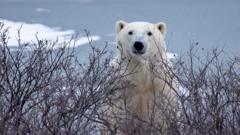
In Churchill, Manitoba, a town known as the polar bear capital of the world, the local community finds itself at a crossroads, faced with the realities of climate change and its impact on its most famous residents. The waters of Hudson Bay, once a reliable source of sea ice for hunting seals, are becoming increasingly unpredictable, leading to more polar bears venturing into town.
During a recent visit, a 13-year-old girl named Tee shared that if a polar bear is too close, the best course of action is to "make a fist – and punch it in the nose." While it’s a comical take on a potentially dangerous situation, it underscores the seriousness of life in this unique environment.
Churchill's populace is continually reminded to be "bear aware," with signs in shops urging caution, especially at night when polar bears are more likely to be encountered. The local ecosystem has shifted; where once was a reliable seal hunting grounds, polar bears are now spending longer periods on land from where they once hunted.
Alysa McCall from Polar Bears International has recorded a sharp decline in the polar bear population, which has fallen from around 1,200 in the 1980s to approximately half that number. This decline is tied to a significant reduction in ice cover caused by climate change, limiting bears' access to their primary food sources.
The emotional magnetism of the bears draws numerous tourists and researchers alike, eager to witness them in their natural habitat. Meanwhile, conservation teams are innovating safety measures; a team from PBI is testing a radar-based system named 'bear-dar.' This AI-guided device is designed to detect polar bears around the clock, thus enhancing safety for both the bears and the humans living nearby.
Churchill's Polar Bear Alert Program maintains a delicate balance, protecting both the residents and the bears. Rangers working in the Alert Program monitor bear movements, and any bear lingering too close to town is tempted into a live trap with bait. Once caught, the bears are relocated further away.
Climate change presents an urbanization challenge, however, leading to an increased frequency of human-bear interactions. In water testing at the new Churchill Marine Observatory, researchers are preparing for the realities of a changing ice-covered landscape and what that means for local wildlife and development.
Mayor Mike Spence remains optimistic amidst the challenges posed by climate change, believing in the potential for adaptation. He envisions a future bustling with activity and guided by sustainable practices, hoping to expand the town's port activities as icy conditions loosen.
Yet, there looms an uncertainty about the bears' future. Tee's friend Charlie reflects aloud on the potential disappearance of polar bears from the area if climate change continues unabated. As the children gaze out at their unique surroundings, they grapple with the reality of living in the polar bear capital of the world—a title that brings both pride and concern in equal measure.