
In brief
Concerns are mounting over the US economy as soaring tariffs initiated by former President Donald Trump trigger a sell-off of government bonds, pushing interest rates to their highest levels since February.
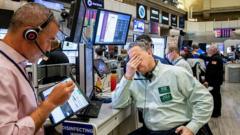
The ripple effects of Donald Trump's tariffs are sending shockwaves through the US economy, particularly impacting government debt as investor confidence declines. A sell-off of US Treasury bonds, typically seen as a safe investment during turbulent times, accelerated on Wednesday with yields surging to 4.5%, a peak unseen since February.The implementation of sweeping taxes on imports from approximately 60 nations commenced at midnight, exacerbated by an escalating trade conflict with China. The situation intensified when the US imposed a staggering 104% tariff on Chinese imports, prompting China to retaliate with an 84% tax on American goods. As the stock markets reacted negatively to these developments, fears of a significant downturn in the US economy have emerged.Investment analysts highlight the implications of the bond sell-off, which threatens to create further fiscal difficulties for the world's largest economy. Normally viewed as a secure avenue for investments, the increase in bond yields marks a critical juncture for America's borrowing costs. Rates for ten-year US government borrowing climbed sharply from 3.9% to alarming new heights in just 48 hours.In light of the recent turbulence, some analysts speculate that the Federal Reserve may need to intervene, echoing past emergency measures, such as those taken by the Bank of England in 2022 after the economic fallout from Liz Truss’s mini-budget. George Saravelos from Deutsche Bank suggests that emergency purchases of US Treasuries may be the only viable option left to stabilize the nerve-wracking bond market. "We are entering uncharted territory," he remarked, acknowledging the unpredictability of market reactions as confidence in US assets dwindles.Simon French, chief economist at Panmure Liberum, noted that the Fed might opt to lower interest rates to stimulate borrowing during these challenging times, highlighting an impending "coin toss" regarding a potential US recession—a significant decline in economic activity that could lead to rising unemployment and decreased incomes. Additionally, JP Morgan has raised its prediction of a US recession from 40% to 60%, warning that recent policies are leaning away from economic growth. The tariff regime imposed by Trump is altering global supply chains, compelling US-based firms to shoulder the tax burden, which may lead to consumers facing higher prices.Speculation is also brewing concerning the nature of the bond dump, with particular attention on foreign holders like China, which owns approximately $759 billion in US bonds. Saravelos cautioned against escalating trade tensions, voicing concerns over a potential financial war that would have detrimental effects on the global economy, asserting that there are no victors in such a conflict. As the market watches for signs indicating an approaching recession, the uncertainty surrounding Trump’s trade strategies continues to loom heavily over both investors and the broader economic landscape.
