In brief
Hundreds of demonstrators preparing to march on Delhi’s Jantar Mantar were intercepted by police, with the group’s founder Abhijeet Dipke and two co‑leaders arrested on arrival in the capital. The 2026 CJP protest demands electoral reforms and the resignation of Election Commissioner Gyanesh Kumar over alleged voter roll manipulation. Tens of thousands of security personnel and roadblocks prevented crowds from reaching the site, while the Delhi Police declined to comment on the detentions. The CJP, which sprang from a satirical comment by Chief Justice Surya Kant, has emerged as a major voice of Gen‑Z anger over unemployment, education policy and political representation. In the aftermath, police buses were seen transporting detained supporters away from the protest area.
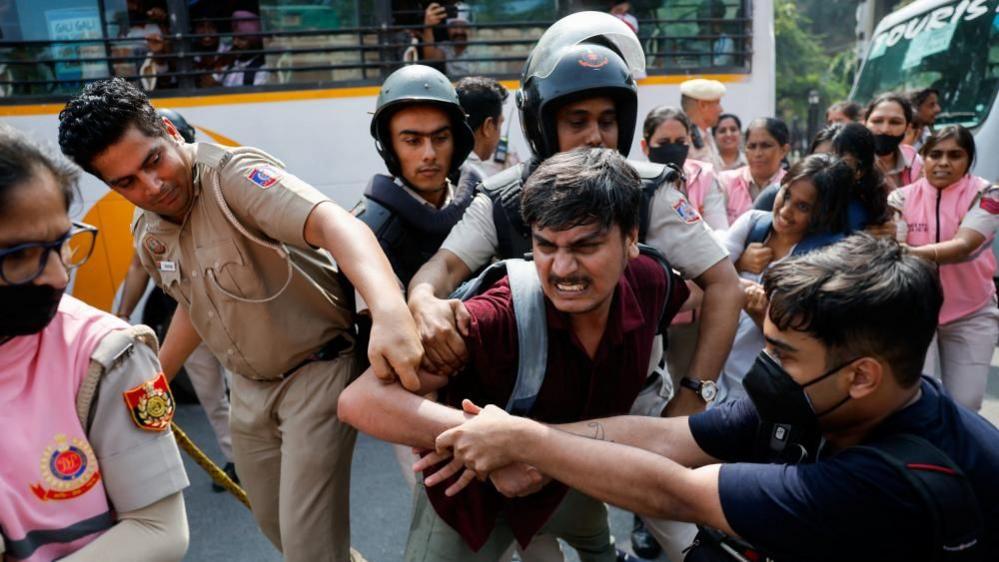
Hundreds of Delhi protesters, many organised by the Gen‑Z‑led Cockroach Janta Party (CJP), were stopped and detained as they attempted to march on the city’s Jantar Mantar yesterday. Police, after refusing permission to use the site, had laid out roadblocks and deployed tens of thousands of officers to block access.
The CJP’s founder, Abhijeet Dipke, who launched the movement in May following remarks by India’s Chief Justice likening jobless young people to “cockroaches”, was detained together with two other leaders – Saurav Das and Ashutosh Ranka – shortly after arriving from Mumbai. The trio has reportedly been taken to an undisclosed location, with the Delhi Police offering no comment on the arrests.
The protest, which titled itself as an appeal for electoral reforms, also called for the resignation of Chief Election Commissioner Gyanesh Kumar amid accusations that voter lists were being skewed to favour the BJP ahead of upcoming state elections.
Earlier this summer the CJP mobilised nationwide to demand education reforms and the resignation of Education Minister Dharmendra Pradhan. The group’s voice stems from widespread frustration over unemployment, exam fraud and opaque government accountability.
A video from the march’s new designated leader, Ajinkya Shinde, warned that if police try to stop protesters, the site would become a “Jantar Mantar of fears.” Student activist Neha Bora, who was also detained, urged demonstrators to “hold the line.” One protester, Sabika Muzaffar, told BBC that she and her mother expected to be taken away; she was indeed removed by police shortly after speaking to the outlet.
In the days that followed, buses, trains, and metro stations were shut down or redirected to curb the influx of marchers. Police buses were seen transporting detained protesters away from the intended gathering point, underscoring the escalated security clampdown.
The CJP, not officially registered as a political party, seeks to amplify Gen‑Z concerns during a critical election season, setting the tone for future civic activism in India.