
In brief
The US economy faced a 0.3% contraction for the first time in three years, prompting President Trump to request more time for his administration to recover it, blaming previous administrations for the downturn while highlighting anticipated investments.
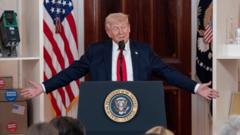
In a recent appeal to business leaders, President Donald Trump requested "a little bit of time" as the US economy experienced a contraction for the first time in three years, raising concerns about an impending recession. He dismissed the contraction figure as misleading, arguing that businesses had stockpiled imports in anticipation of his tariffs. Trump mentioned that $8 trillion in inward investment has been pledged, which he believes will boost American manufacturing capabilities.The Commerce Department reported a 0.3% contraction at an annual rate, contrasting sharply with the previous quarter's 2.4% growth. As he commemorates 100 days in office, Trump's approval ratings reflect growing public discontent over his handling of the economy. During an event at the White House, Trump attributed the disappointing GDP figures to his Democratic predecessor, President Joe Biden, stating, "This is Biden's economy because we took over on January 20th." His remarks drew criticism from Democratic leaders, with Congressman Hakeem Jeffries asserting, "This is not Joe Biden's economy, Donald, it is your economy."At the same White House event, Trump highlighted planned investments in technology, healthcare, and infrastructure, introducing CEO figures from major corporations such as Hyundai, Toyota, and Johnson & Johnson. He urged Congress to pass his tax bill, which incorporates significant tax cuts but faces resistance from both Democratic and some Republican lawmakers.Earlier in the day, during a televised cabinet meeting, Trump downplayed concerns over potential shortages of consumer goods due to declining trade with China, quipping that perhaps children might have to settle for two dolls instead of thirty, albeit at a higher price.Since announcing import taxes—including a 10% levy on nearly all imports—Trump's administration has faced backlash, particularly from China, which retaliated against American products with its own taxes. These ongoing tariffs have deepened tensions in what many are calling a trade war, with certain levies on Chinese goods reaching up to 245%.
