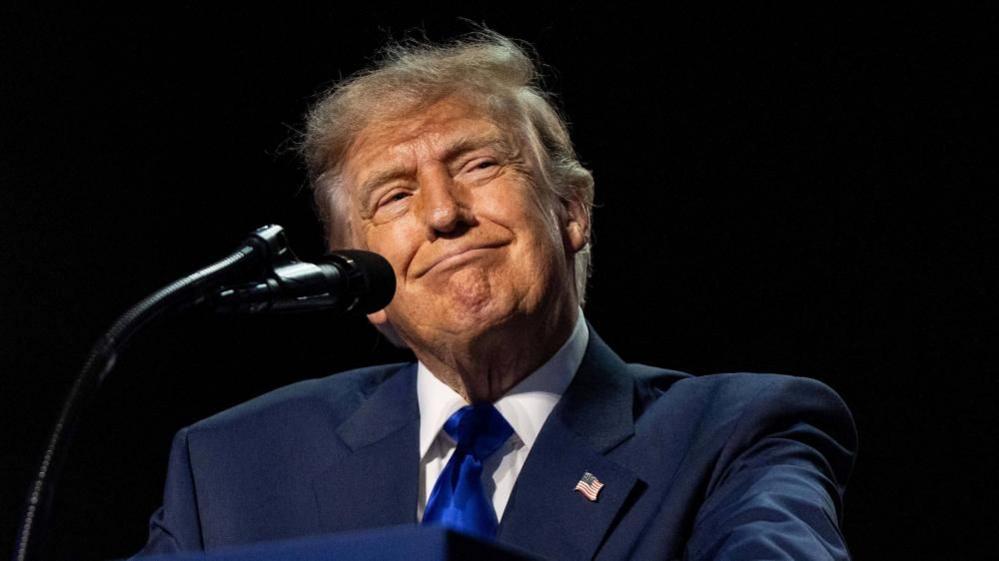
As America gears up for a pivotal election, the clash between two contrasting visions for the future has intensified national anxiety. Donald Trump warns that the country will "go to hell" and become "communist immediately" if he loses, while Kamala Harris labels him a "fascist" seeking "unchecked power." This charged atmosphere has kept voters on edge, especially in key battleground states flooded with fear-driven campaign ads.
In Wisconsin, Heather Soucek, a Trump supporter, feels the campaign's fear tactics are in play. She dismisses Harris's economic proposals as "scary." Conversely, Tracy Andropolis, a registered independent, expresses deep concern about a potential Trump victory, believing it's one of the most critical elections in her lifetime.
Across the nation, Americans are increasingly moving into political enclaves where neighbors share their views, yet they are forced into the reality of a divided election outcome. With millions poised to react to the eventual results, the stark differences between their beliefs are set to create shockwaves.
As both candidates have navigated their tumultuous paths to polling day, they each come with historical baggage, particularly Trump, who has faced numerous legal challenges while rallying his base with claims of political persecution. Harris, once buoyed by early excitement as a fresh leader, has since struggled against perceptions of her established political background.
Voter sentiment showcases a worrying trend: many view this election as a battle for the soul of America. For some, it is a struggle against an authoritarian future, while for others, it pits their interpretations of freedom against growing federal control.
With tensions running high, the aftermath of this election is poised to be contentious, leading to expectations of protests and legal disputes. Polls suggest both candidates maintain near equality in support, yet voters' fervent loyalty reveals a divide that runs deep, leaving many to brace themselves for a bittersweet reckoning on election night.
In Wisconsin, Heather Soucek, a Trump supporter, feels the campaign's fear tactics are in play. She dismisses Harris's economic proposals as "scary." Conversely, Tracy Andropolis, a registered independent, expresses deep concern about a potential Trump victory, believing it's one of the most critical elections in her lifetime.
Across the nation, Americans are increasingly moving into political enclaves where neighbors share their views, yet they are forced into the reality of a divided election outcome. With millions poised to react to the eventual results, the stark differences between their beliefs are set to create shockwaves.
As both candidates have navigated their tumultuous paths to polling day, they each come with historical baggage, particularly Trump, who has faced numerous legal challenges while rallying his base with claims of political persecution. Harris, once buoyed by early excitement as a fresh leader, has since struggled against perceptions of her established political background.
Voter sentiment showcases a worrying trend: many view this election as a battle for the soul of America. For some, it is a struggle against an authoritarian future, while for others, it pits their interpretations of freedom against growing federal control.
With tensions running high, the aftermath of this election is poised to be contentious, leading to expectations of protests and legal disputes. Polls suggest both candidates maintain near equality in support, yet voters' fervent loyalty reveals a divide that runs deep, leaving many to brace themselves for a bittersweet reckoning on election night.