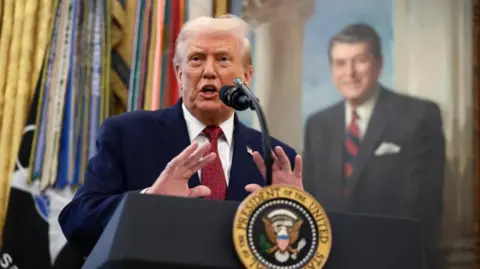
As President Trump gears up for another round of tariffs impacting Canada—one of the largest U.S. trading partners—questions surround his motivations and sentiments towards the country. With past grievances hinting at a strained dynamic, analysts and officials alike are attempting to interpret his actions, which seem to reflect both personal and political dimensions.
There are various theories surrounding Trump's discontent with Canada. Some suggest lingering resentment stemming from unsuccessful Canadian business ventures, while others point to a notable photograph from a 2019 G7 summit, depicting Canadian Prime Minister Justin Trudeau seemingly leaning in for a kiss with Melania Trump, which may have left a mark on Trump.
As he ramps up trade penalties for Canadian goods, his disdain has become apparent, resulting in fluctuations in Canadian political landscapes and growing anxiety over the future of North American trade relations. Stephen Moore, a former adviser to Trump and economist at the Heritage Foundation, reflected on the unusual nature of the U.S.-Canada relationship, noting Trump’s perspective often mixes personal feelings with political strategy.
For Moore, Trump’s tactics may be seen more as a means of securing strategic leverage rather than purely economic advantage—asserting that “with Trump, politics is personal.” As the tariff storm brews, it remains unclear how these trade wars will unfold, but the implications reverberate across both countries, prompting heightened scrutiny of Trump’s fixation on historical grievances and ulterior motives.