In brief
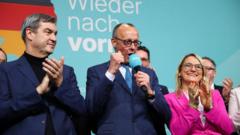
Conservative leader Friedrich Merz has secured an electoral victory in Germany, outpacing other parties but falling short of the expected 30% vote share. Merz addressed jubiliant supporters, acknowledging the significant responsibility ahead. However, the far-right Alternative for Germany (AfD) also enjoyed a historic performance, finishing second with 20.8%—their best result to date.
As results poured in early Monday, it became clear the AfD had a significant lead in eastern regions, drawing 34% of the vote in those areas. Alice Weidel, the AfD's candidate for chancellor, claimed, "Germans have voted for change," but the mood at their headquarters was quieter than expected given their success. Despite Merz's dominance across vast regions of Germany, his Conservative party—CDU—achieved only 28.6%, which raises questions about forming a robust coalition. With a high voter turnout of 83%, the election signaled a clear demand for change among the populace, contradicting Merz's push for a strong mandate. Merz has ruled out any collaboration with the AfD, adhering to a longstanding norm against partnering with far-right factions. His most likely allies, the Social Democrats, faced historic losses, with leader Olaf Scholz admitting to the party's disappointing defeat and opting out of coalition negotiations.The situation complicates coalition-building; following four years of a three-party alliance, the only feasible partner remains the Greens, previously dismissed by Merz. In a broader European context, Merz's victory received international recognition, with leaders like French President Emmanuel Macron emphasizing unity. All the while, the AfD's rise can be attributed in part to digital campaigns that attracted younger voters, contrasting with Merz's reliance on older demographics. As political discussions shift, it remains to be seen how Merz will navigate this divided landscape marked by rising far-right sentiments and an invigorated younger electorate attracted by alternatives beyond the traditional CDU framework.