In brief
The olive harvest, a vital aspect of Palestinian culture and economy, faces severe threats from Israeli military actions and settler violence. Recent incidents, including the shooting of farmer Hanan Abu Salameh, underscore escalating challenges during the harvesting season. Farmers report systematic attacks and obstructions, leading to substantial economic losses and destruction of olive groves.
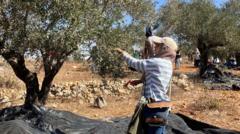
Amidst the ongoing Israeli-Palestinian conflict, the annual olive harvest in the occupied West Bank is increasingly under siege from violence and restrictions. A stark example is the tragic death of Hanan Abu Salameh, a 59-year-old Palestinian woman, who was shot by an Israeli soldier while harvesting olives on her family’s land. Despite coordinating with the Israel Defense Forces (IDF) ahead of time, her family faced a hail of gunfire while they worked the fields, leaving them devastated and without justice as the IDF investigates the incident.The olive harvest has long been more than a matter of sustenance; it represents a cultural and economic cornerstone for Palestinian families. However, as the United Nations reports, the situation has become precarious, with farmers enduring organized attacks from Israeli settlers and military forces blocking access to their lands. Omar Tanatara, a villager from Umm Safa, recounted last year's devastation when the army abusive destroyed their harvest. “At one point, they came, threw the olives we’d gathered on the ground, and ordered us to leave,” he shared. Even during this harvest, fears of violence from settlers remain high. Israeli and international activists, who try to support Palestinian farmers, also find themselves at risk. Peace activist Zuraya Hadad was attacked while aiding farmers during the olive harvest, sustaining serious injuries but encountering no accountability for her attacker from accompanying Israeli soldiers. Hadad’s experience illustrates the uncertain safety even in the presence of supposed protective forces.The olive tree has long symbolized resilience and connection to the land for Palestinians. However, the ongoing violence and destruction of hundreds of olive trees, which can take years to mature, challenge these families’ connection to their heritage and livelihoods. A staggering portion of their olive groves remained uncultivated in 2023 due to restrictions, impacting an economy that relies heavily on this crop.Factory owner Abd al-Rahman Khalifa witnessed firsthand the economic toll of these disruptions, forecasting further declines in income this year. With settlers increasingly emboldened by nationalist political support, many farmers face violence that impedes their ability to harvest, leaving them with a bleak outlook for their primary source of income.As farmers continue to gather what they can, the community’s resilience shines through as they bring their harvest to local presses, grappling with an uncertain future anchored in their centuries-old connection to the olive tree—a connection that remains under threat.