
In brief
Advanced imaging techniques provide hope for full legibility of historical writings, shedding light on philosophy from the past.
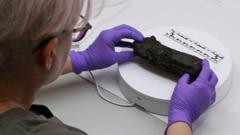
The long-lost words from a burnt scroll dating back 2,000 years have been revealed for the first time through innovative X-ray imaging and artificial intelligence. Discovered in the ancient Roman town of Herculaneum, the scroll was damaged by the catastrophic eruption of Mount Vesuvius in 79AD, rendering it too delicate for physical opening.Scientists were able to digitally "unwrap" the scroll, which resembles a lump of charcoal, with promising results indicating it might contain philosophical writings. Stephen Parsons, the project lead of the Vesuvius Challenge, an international team exploring the Herculaneum scrolls, expressed optimism stating, "We're confident we will be able to read pretty much the whole scroll in its entirety."These carbonized scrolls were buried under layers of volcanic ash along with Herculaneum and its neighboring city of Pompeii. Previous attempted unrollings of some scrolls resulted in their disintegration, leaving many preserved in the Bodleian Library at the University of Oxford untouched for years.The scrolls’ rescue mission commenced after breakthroughs in non-invasive imaging techniques were utilized. Researchers employed a synchrotron at Diamond Light Source in Oxfordshire, producing potent X-ray beams capable of creating a 3D reconstruction of the scrolls while preserving their fragile condition. By identifying individual layers of papyrus within the scroll, researchers can digitally unfurl them. However, this process is complicated as both the ink and the material are carbon-based, requiring AI to differentiate between the two to reveal the text latent within the layers.Progress has already been made, with some letters becoming visible. The team anticipates transitioning from isolated words to substantial passages in their upcoming analysis. Historically, last year’s Vesuvius Challenge team deciphered around 5% of another scroll, believed to discuss Epicurean philosophy. The present scroll is expected to echo similar themes, prompting calls for further innovation to unlock additional content.Nicole Gilroy, head of conservation, reflects on the meaningful connections to the past these scrolls represent: "There’s a real human aspect to it that I just think is really precious." Online subscribers are encouraged to stay updated with discoveries that interlink present-day scholars with ancient scribes.