
In brief
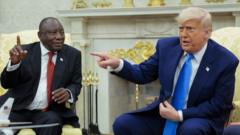
During a recent meeting with President Trump, Cyril Ramaphosa faced harsh criticism and was subjected to unfounded claims about violence against white South Africans. While he exhibited commendable composure, the fallout from the encounter may paradoxically strengthen his standing among South Africans who witnessed his diplomatic resolve, amid ongoing domestic challenges.
Article Text:South Africa's President Cyril Ramaphosa recently embarked on a trip to Washington seeking to improve relations with the Trump administration, but he encountered fierce resistance instead. President Trump amplified unfounded accusations of a genocide against white South Africans in a high-profile meeting that unfolded in front of a global audience. Ramaphosa's calm demeanor in the face of Trump's provocative rhetoric has sparked contrasting views back home, where he grapples with escalating challenges facing the African National Congress (ANC).While some critics argue that Ramaphosa's restrained reaction was not robust enough, his conduct during the diplomatic debacle has resonated positively with many South Africans. This comes at a particularly complicated moment for Ramaphosa, as the ANC navigates an unstable government coalition that consists of ten parties following lackluster performance in national elections.The coalition has been marred by tensions over contentious legislation concerning land reform and healthcare, along with budgetary constraints causing public outcry as taxation burdens the vulnerable populace. Rising crime rates, rampant corruption, inadequate public services, and deteriorating infrastructure further compound the dissatisfaction. As internal factions vie for dominance, the pressure on Ramaphosa only intensifies.In the backdrop of this political turmoil, Ramaphosa's strategic handling of the encounter with Trump could prove advantageous. Observers note that his experiences as a negotiator during the apartheid era and the years of political instability that followed position him uniquely to strengthen South African governance. His composure was a reminder of his ability to navigate complex situations, highlighting his role as a stabilizing figure.With critics like Julius Malema, who gained some recognition during the meeting, attempting to seize political momentum, some analysts believe Ramaphosa's image could benefit from national awareness of his leadership during the confrontation. Notably, Malema's controversial sentiments highlighted by Trump may backfire, failing to translate into enduring support.Moreover, Ramaphosa's pursuit of a viable trade agreement with the US remains crucial for South Africa's economic growth, threatening to impact the African Growth and Opportunity Act (AGOA) if left unchecked. While the trip did not yield the anticipated reset in US relations, the Carter Center's acknowledgment of Ramaphosa's diplomatic skill may bolster public confidence in his presidency.The fallout from Trump's attack and the ensuing media portrayal could paradoxically empower the present coalition government, showcasing a united front to South Africans uncertain of their future. Political analysts note that the meeting could translate into bolstered support for the current party leadership, demonstrating the collaborative governance model that is vital for advancing the nation.Ramaphosa is consequently placed in a position where he must navigate these domestic dynamics while effectively managing relationships on the international stage. The coming weeks will reveal whether this challenging encounter serves as a turning point for both his presidency and the South African political landscape.

