
In brief
The Léon Thévenin provides essential communication services to millions, preventing digital blackouts and maintaining connectivity.
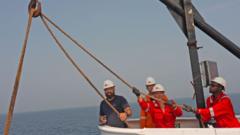
The Léon Thévenin, a massive repair ship reminiscent of a football field, tirelessly sails the waters around Africa, manned by over 50 dedicated engineers and technicians. Its mission is vital: to keep the continent online amidst challenges like last year's internet blackout, which left millions in cities from Lagos to Nairobi struggling as broken internet cables interrupted essential services. The ship has spent 13 years on these essential repairs, ensuring that countries stay connected.One of the ship's crew members, Shuru Arendse, takes pride in being the “hero” of communication, stating that his efforts allow IT professionals back home to fulfill their jobs. The ship operates in a crucial space that connects servers primarily located outside Africa through a vast network of undersea fiber optic cables. These cables, when intact, enable data transmission for various online services, but when damaged, they can halt digital activities in certain regions.Undersea cables are expected to be functional for 25 years with minimal maintenance. Nevertheless, they may suffer damage primarily due to human activities, such as fishing trawlers or careless anchoring. Natural disasters also play a significant role in causing interruptions to these underwater lifelines. Instances of broken cables are not isolated; examples include earlier disruptions in the Red Sea and off the coast of West Africa where numerous cables were severed, leading to widespread connectivity issues.Local teams can manage faults at shallow depths, but the Léon Thévenin is essential for dealing with deeper problems, capable of repairing cables over 5,000 meters underwater. The repair processes are intricate; for instance, when there’s a broken fibreglass core, the crew can track it by sending light signals through the cables. If the insulation is damaged, they must perform complicated electrical tests to identify the problem area before deploying the ship's remotely operated vehicle (ROV) for precise repairs.The ROV performs critical tasks underwater, such as locating and severing damaged cable sections and enabling the crew to splice new segments. Each complex repair can take over 24 hours to complete, and often users may not even notice disruptions thanks to traffic rerouting through other cables.The team's readiness is commendable, as they can set sail within 24 hours following an alert about damaged cables. Their extensive time at sea—averaging over six months yearly—comes with sacrifices, as some crew members miss significant family events. They share diverse backgrounds, and camaraderie develops onboard as they navigate their intense work-life alongside personal commitments.As Captain Thomas Quehec aptly puts it, "there are heroes at sea," dedicated to linking Africa to the global digital landscape. Their determination encapsulates the essential service provided by the Léon Thévenin, a vessel integral to keeping the continent connected.

