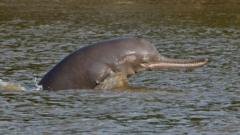
India's rivers are home to approximately 6,327 dolphins, predominantly the endangered Gangetic dolphin, yet their survival hangs in the balance. Unlike their oceanic counterparts, these dolphins do not leap through the air or swim on their backs; instead, they exhibit unique adaptations, such as swimming sideways and having limited vision due to their murky river habitats.
A comprehensive survey conducted by researchers at the Wildlife Institute of India, spanning 58 rivers across 10 states from 2021 to 2023, revealed that India's river system primarily supports the Gangetic dolphin with only three Indus dolphins recorded. Both species hold an "endangered" status as classified by the International Union for Conservation of Nature (IUCN).
The ancestors of river dolphins are fascinating, often referred to as "living fossils" because they evolved from marine species millions of years ago. They adapted to riverine ecosystems as seas flooded regions of South Asia, demonstrating the ability to thrive in shallow, murky waters, and have developed unique characteristics diverging from their ocean-dwelling relatives.
The latest survey is vital for monitoring dolphin populations that have seen a significant decline since 1980, with the loss of at least 500 dolphins due to entanglement in fishing nets and harmful human practices. Conservationists, such as Ravindra Kumar Sinha, note that awareness about these mammals was sparse until the early 2000s. The Gangetic dolphin was designated as India’s national aquatic animal in 2009, leading to action plans and dedicated conservation efforts soon after.
However, the situation remains dire. Dolphins are still subjected to poaching for their flesh and blubber, which are exploited for fishing bait, while accidental deaths often go unreported due to fear of legal repercussions. Many fishermen reportedly dispose of carcasses to avoid penalties under stringent wildlife legislation.
Additionally, the rise of river cruise tourism over the past decade poses a new threat as increased vessel traffic disrupts natural habitats, heightening the risk of collisions. Sinha emphasizes that the noise pollution from cruises is detrimental to the sensitive dolphin population, reminiscent of the decline of the Baiji dolphins in the Yangtze River.
These river dolphins face challenges attributed to their evolutionary adaptations: their partial blindness necessitates reliance on echolocation to navigate, leaving them vulnerable to modern threats in their environment. Their reproductive rate compounds their risk, with dolphins maturing slowly and typically birthing only one calf every two to three years.
Despite these challenges, Sinha maintains a hopeful outlook for the future of river dolphins in India. "Government initiatives have played a significant role in saving the dolphins. A lot has been accomplished, yet substantial work remains," he concludes.