Inside the Echelon of Espionage: Training Spies at Sciences Po Saint-Germain
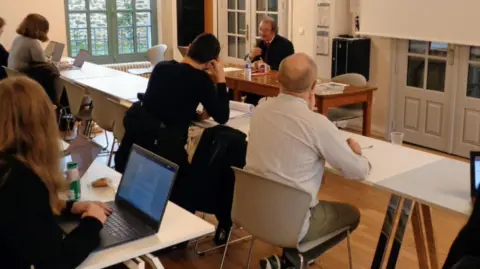
Located on the outskirts of Paris, the Sciences Po Saint-Germain campus serves as a unique training ground for those involved in intelligence work. Led by Professor Xavier Crettiez, the program, known as the Diplôme sur le Renseignement et les Menaces Globales, attracts a mix of typical undergraduates and seasoned spies—creating an atmosphere rich in knowledge exchange.
Professor Crettiez admits that he often does not know many of his students' true identities, stating, I rarely know the intelligence agents' backgrounds when they are sent on the course, and I doubt the names I'm given are genuine anyway. This distinct educational environment stems from the French government's need to bolster its intelligence capabilities following the 2015 terrorist events in Paris.
The one-year course encompasses 120 hours of intricate training, focusing on various topics such as organized crime economics, political violence, and Islamic jihadism. Recently, this critical education model has intensified interest among big corporations that face cybersecurity threats, leading to partnerships that see course graduates swiftly hired into pivotal roles.
The program’s appeal is evident with its growing enrollment, which has reached 28 students, including six intelligence operatives. While networking and collaboration are common, the spies are noticeably discrete in their interactions, often seen mingling separately during breaks.
The diversity of perspectives in the classroom is noteworthy, with nearly half of the students now female—a shift attributed to the evolving role of women in the intelligence field and a burgeoning sense of patriotism among younger generations.
Ultimately, the program not only equips participants with vital skills in detecting and mitigating global threats but also contributes to shaping a new era of intelligence work—one that resonates with both public and private sector needs in an increasingly insecure world.