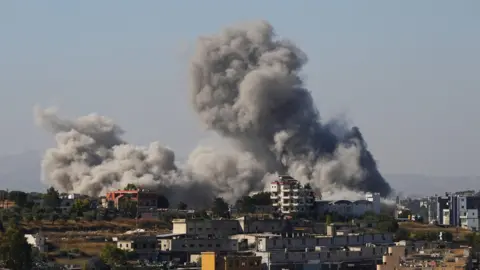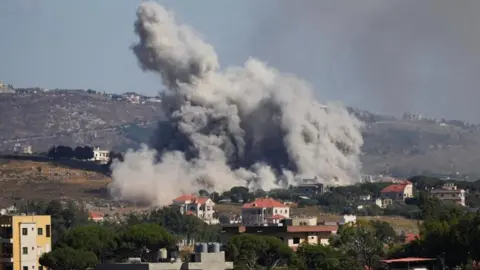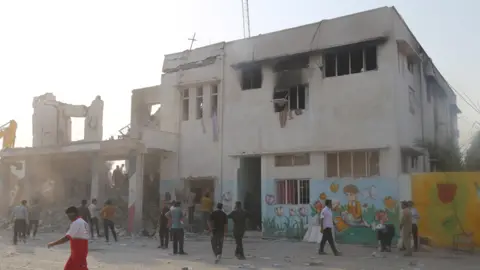
Standing next to the blown-out windows and cracked walls of her apartment in Tel Aviv, Liat Zvi voices an exasperation many Israelis say they feel. It's depressing… we've been in war for two and a half years and this just feels like another round, she sighs. Six weeks ago, her central neighbourhood was among the many locations where Tehran delivered its response to US-Israeli attacks. An Iranian missile evaded Israel's multi-tiered air defense and smashed into a residential building, killing 32-year-old carer Mary Anne Velasquez de Vera from the Philippines. This was the first fatality in Israel during the war with Iran – a conflict that's currently on a precarious pause.
Now, like many of her fellow Israelis, Zvi is asking herself what this conflict actually achieved for her country and is finding it hard to contemplate what happens next. It's too much for me to look ahead - it's really hard. New polling from the Hebrew University of Jerusalem indicates widespread war-weariness among Israelis, with about two-thirds opposing the current tentative truce between Washington and Tehran. The majority believe neither Iran nor Hezbollah in Lebanon has been significantly weakened by recent US and Israeli bombardments.
Words like 'despair', 'confusion', and 'anger' characterized the sentiments expressed by survey participants, while a minority mentioned feelings of hope. Public opinion reflects a divide on military strategy, with 39.5% supporting continued attacks on Tehran versus 41.4% favoring the respect of the ceasefire.
Despite skepticism about the success of military action, Israelis express a reluctance to include Hezbollah in ceasefire negotiations. Historical polling reflects differing opinions between Israel's Jewish majority and Arab minority.
As perspectives on the conflict evolve, Prime Minister Netanyahu insists on the need for a strong stance in ongoing negotiations. As discussions between Israel and Lebanon take place, further developments remain uncertain. With parliamentary elections approaching, sentiment toward Netanyahu’s coalition has shifted, raising implications for the future political landscape in Israel.
Now, like many of her fellow Israelis, Zvi is asking herself what this conflict actually achieved for her country and is finding it hard to contemplate what happens next. It's too much for me to look ahead - it's really hard. New polling from the Hebrew University of Jerusalem indicates widespread war-weariness among Israelis, with about two-thirds opposing the current tentative truce between Washington and Tehran. The majority believe neither Iran nor Hezbollah in Lebanon has been significantly weakened by recent US and Israeli bombardments.
Words like 'despair', 'confusion', and 'anger' characterized the sentiments expressed by survey participants, while a minority mentioned feelings of hope. Public opinion reflects a divide on military strategy, with 39.5% supporting continued attacks on Tehran versus 41.4% favoring the respect of the ceasefire.
Despite skepticism about the success of military action, Israelis express a reluctance to include Hezbollah in ceasefire negotiations. Historical polling reflects differing opinions between Israel's Jewish majority and Arab minority.
As perspectives on the conflict evolve, Prime Minister Netanyahu insists on the need for a strong stance in ongoing negotiations. As discussions between Israel and Lebanon take place, further developments remain uncertain. With parliamentary elections approaching, sentiment toward Netanyahu’s coalition has shifted, raising implications for the future political landscape in Israel.