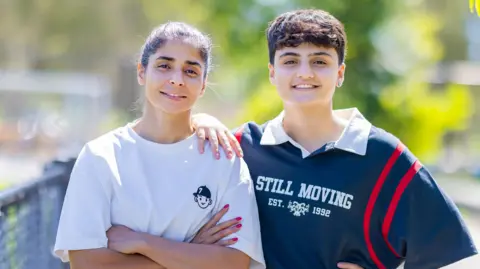
Two Iranian footballers who were granted asylum in Australia have said the country has given them hope for a future where we can live and compete in safety. Atefeh Ramezanisadeh and Fatemeh Pasandideh were among seven members of the Iranian team who were originally granted humanitarian visas while in Australia for the Women's Asian Cup - but the other five changed their minds and returned home. It was feared the team would face repercussions for declining to sing the Iranian national anthem at their opening match, days after the war began.
In their first public statement, Ramezanisadeh and Pasandideh thanked supporters for their compassion and asked for privacy. At this stage, our primary focus is on our safety, our health and beginning the process of rebuilding our lives, the statement read. They expressed gratitude to the Iranian diaspora community in Australia for their warmth and generosity, which has made their transition smoother. They also acknowledged the Australian government's assistance in providing a safe haven during these tumultuous times.
Ramezanisadeh and Pasandideh, currently undergoing training with A-League Women’s team Brisbane Roar, aspire to continue their sporting careers in Australia. The backdrop of their story is shaped by the ongoing conflict in Iran, which erupted on February 28, when Israel and the US launched joint air strikes. Concerns grew about the players' safety as state TV reports labeled them traitors for their prior silence during the anthem. After careful consideration, the players were relocated and are reportedly under the protection of Australian Federal Police.
While those who returned home may have faced potential pressures, the Australian Home Affairs Minister acknowledged the complex decisions made by these athletes, highlighting the profound implications of their choices within the current geopolitical climate. Amid all the drama, Iran's sports ministry asserted that the players had defeated the enemy's plans while claiming that the Australian government is working with external political influences.
In their first public statement, Ramezanisadeh and Pasandideh thanked supporters for their compassion and asked for privacy. At this stage, our primary focus is on our safety, our health and beginning the process of rebuilding our lives, the statement read. They expressed gratitude to the Iranian diaspora community in Australia for their warmth and generosity, which has made their transition smoother. They also acknowledged the Australian government's assistance in providing a safe haven during these tumultuous times.
Ramezanisadeh and Pasandideh, currently undergoing training with A-League Women’s team Brisbane Roar, aspire to continue their sporting careers in Australia. The backdrop of their story is shaped by the ongoing conflict in Iran, which erupted on February 28, when Israel and the US launched joint air strikes. Concerns grew about the players' safety as state TV reports labeled them traitors for their prior silence during the anthem. After careful consideration, the players were relocated and are reportedly under the protection of Australian Federal Police.
While those who returned home may have faced potential pressures, the Australian Home Affairs Minister acknowledged the complex decisions made by these athletes, highlighting the profound implications of their choices within the current geopolitical climate. Amid all the drama, Iran's sports ministry asserted that the players had defeated the enemy's plans while claiming that the Australian government is working with external political influences.