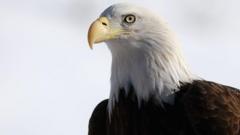
The bald eagle has been recognized informally as the national bird for nearly 250 years but has now been officially designated through recent legislation signed by President Joe Biden. This historic move, made on Christmas Eve, culminates years of advocacy and reflects a wider acknowledgment of the bald eagle's significance to the nation.
Jack Davis, co-chair of the National Bird Initiative at the National Eagle Center, expressed that calling the bald eagle the national bird without formal designation was a longstanding oversight. He declared, "But now the title is official, and no bird is more deserving." This declaration aligns with the bald eagle's long-standing presence on the Great Seal of the United States since 1782, symbolizing the core values of the country.
The decision to officially name the bald eagle has its roots in Minnesota, which boasts one of the largest populations of these majestic birds. Despite some historical opposition, notably from Benjamin Franklin, who criticized the bird for its perceived moral failings, numerous officials and citizens view the bald eagle as a fitting representation of courage, freedom, and resilience.
Additionally, the bald eagle is protected under the National Emblem Act of 1940, making any commercial activity concerning the bird illegal. After experiencing significant population declines, conservation efforts since 2009 have successfully increased their numbers, enhancing their status as an icon of American wildlife. The bald eagle law was among several significant legislative pieces signed by Biden, reflecting a commitment to both cultural heritage and wildlife preservation.
Jack Davis, co-chair of the National Bird Initiative at the National Eagle Center, expressed that calling the bald eagle the national bird without formal designation was a longstanding oversight. He declared, "But now the title is official, and no bird is more deserving." This declaration aligns with the bald eagle's long-standing presence on the Great Seal of the United States since 1782, symbolizing the core values of the country.
The decision to officially name the bald eagle has its roots in Minnesota, which boasts one of the largest populations of these majestic birds. Despite some historical opposition, notably from Benjamin Franklin, who criticized the bird for its perceived moral failings, numerous officials and citizens view the bald eagle as a fitting representation of courage, freedom, and resilience.
Additionally, the bald eagle is protected under the National Emblem Act of 1940, making any commercial activity concerning the bird illegal. After experiencing significant population declines, conservation efforts since 2009 have successfully increased their numbers, enhancing their status as an icon of American wildlife. The bald eagle law was among several significant legislative pieces signed by Biden, reflecting a commitment to both cultural heritage and wildlife preservation.