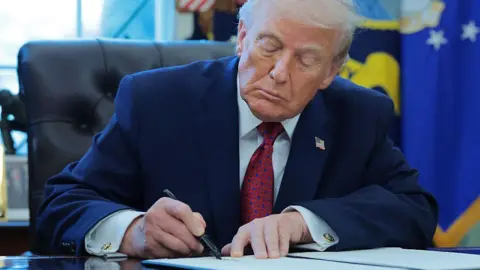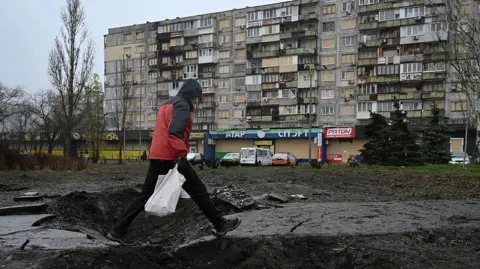
German Chancellor Friedrich Merz confirmed that the latest peace plan draft for Ukraine has been presented to U.S. President Donald Trump, which includes a proposal on territorial concessions that Kyiv may be willing to consider.
Merz emphasized that any territorial decisions must be made by the Ukrainian president and the Ukrainian populace, highlighting the importance of local consensus in peace negotiations.
In recent weeks, European leaders have collaborated closely with Ukraine to develop a peace plan that reflects Kyiv's needs and concerns, aiming to navigate the complexities of the ongoing conflict.
Trump, for his part, has expressed frustration over the intricacies surrounding the sovereignty questions related to regions occupied by Russia. European allies are wary that Trump could push for a Russian-favored resolution, potentially harming Ukraine after years of conflict.
During a recent phone call with Trump, Merz, along with leaders from France and the UK, outright stated the necessity for European interests to be acknowledged in any agreement.
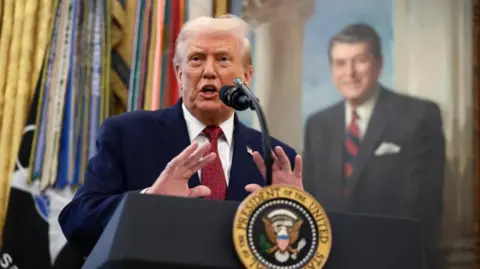
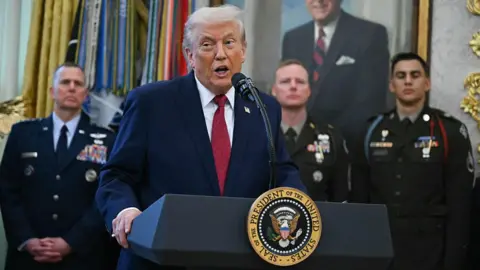
Trump noted that discussions surrounding Ukraine were robust, mentioning his ongoing considerations regarding attendance at an upcoming European summit.
Ukrainian President Volodymyr Zelensky has indicated readiness to engage in direct talks with Trump to address unresolved issues, though all matters must be settled before a meeting can occur.
The territorial debate is particularly contentious; Ukraine has firmly rejected any demands to withdraw from contested eastern regions held, citing both legal and moral grounds.
Zelensky is poised to further discussion with allies as he co-chairs a coalition meeting with Merz, Macron, and Starmer to reinforce international support for Ukraine.
As high-level diplomatic exchanges continue among U.S., European, and Ukrainian officials, Russia has remained largely silent, with recent comments from Foreign Minister Sergei Lavrov suggesting Russian alignment with U.S. positions on peace efforts.
However, Ukraine and its allies assert that any peace agreement must include strong security guarantees to prevent future aggression, with Kyiv insisting on measures to legitimize its territorial integrity.
Zelensky also proposed that elections could be feasible under guaranteed security provisions. His presidency, initially set to conclude in May 2024, faces uncertainty due to ongoing martial law.
NATO Chief Mark Rutte reiterated the urgency of addressing Russia's threats, urging allied nations to recognize the potential for conflict on a devastating scale.