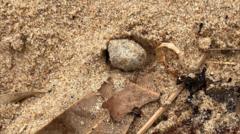
On January 14, numerous beaches in Sydney's Northern Beaches were abruptly closed after marble-sized balls began washing ashore. Analysis revealed that these enigmatic spheres comprised saturated acids, E. coli, and faecal bacteria. As a response, the Northern Beaches Council dispatched the unusual debris to the New South Wales Environment Protection Authority (EPA) for further scientific scrutiny.
Popular sites such as Manly and Dee Why fell victim to the closures, part of the council's ongoing efforts to safeguard public health. This incident marks a worrying recurrence, reminiscent of a similar event last October when thousands of black blobs appeared along Sydney's coastline. Those black formations prompted days of beach closures and cleanup operations.
In a statement released on Tuesday, the Northern Beaches Council confirmed that the most recent batch of balls has been successfully removed from local harbours, advising the public to refrain from touching the found objects and to alert local authorities instead. Alongside toxic substances, the balls were also found to contain volcanic rock pumice.
Northern Beaches mayor Sue Heins expressed hope that the EPA's forthcoming analysis would pinpoint the source of the contamination, aiming to prevent such occurrences in the future. She reassured the community by stating that regular inspections of beaches were underway, and urged residents to report any suspicious debris they encounter.
Previously, the October mystery materials were erroneously labeled as "tar balls" but were later identified as containing a disturbing array of substances, including cooking oil, soap scum, blood pressure medications, pesticides, and even methamphetamine. Scientists noted similarities to "fatbergs," grease accumulations often found in sewage systems. However, Sydney Water officials assured that current water treatment systems function normally, and no issues related to waste management have been reported.
Sydney Australia
Popular sites such as Manly and Dee Why fell victim to the closures, part of the council's ongoing efforts to safeguard public health. This incident marks a worrying recurrence, reminiscent of a similar event last October when thousands of black blobs appeared along Sydney's coastline. Those black formations prompted days of beach closures and cleanup operations.
In a statement released on Tuesday, the Northern Beaches Council confirmed that the most recent batch of balls has been successfully removed from local harbours, advising the public to refrain from touching the found objects and to alert local authorities instead. Alongside toxic substances, the balls were also found to contain volcanic rock pumice.
Northern Beaches mayor Sue Heins expressed hope that the EPA's forthcoming analysis would pinpoint the source of the contamination, aiming to prevent such occurrences in the future. She reassured the community by stating that regular inspections of beaches were underway, and urged residents to report any suspicious debris they encounter.
Previously, the October mystery materials were erroneously labeled as "tar balls" but were later identified as containing a disturbing array of substances, including cooking oil, soap scum, blood pressure medications, pesticides, and even methamphetamine. Scientists noted similarities to "fatbergs," grease accumulations often found in sewage systems. However, Sydney Water officials assured that current water treatment systems function normally, and no issues related to waste management have been reported.
Sydney Australia