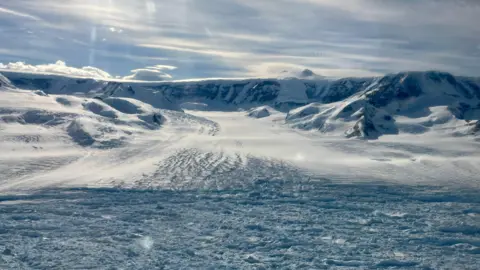
The rapid retreat of Hektoria Glacier, which pulled back over 8 kilometers in late 2022, has baffled scientists until now. A recent study suggests that the glacier may represent the first example in modern history of a glacier resting on the seabed rapidly destabilizing, possibly leading to accelerated sea-level rise. However, there remains a debate within the scientific community regarding the specifics of the glacier's grounding status.
Glacial behavior typically involves a combination of natural processes and the influences of climate change. Hektoria's retreat was notable, with the glacier losing about 25 kilometers between January 2022 and March 2023, a change attributed to the earlier collapse of Larsen B ice shelf, which had previously helped stabilize Hektoria's advance.
As reported, the glacier may have been in a grounded state, resting on the seabed, when it began to retreat dramatically due to upward forces from warming ocean waters. This phenomenon could signify what may happen in other vulnerable glacier regions, particularly those losing sea-ice stabilization.
Despite the promising insights from the study, contrasting opinions exist within the scientific community regarding the analysis led by Naomi Ochwat from the University of Colorado Boulder. Notably, glaciologist Dr. Frazer Christie and others raise questions about the accuracy of satellite data used to track grounding lines, which could alter interpretations of the glacier's behavior. Concerns persist that misidentifying whether the glacier was floating or grounded during its retreat could lead to misunderstandings about the severity of this event.
While the discussion continues, researchers unanimously agree on the alarming speed at which Antarctic glaciers are retreating, underscoring the need for enhanced data monitoring from satellites to capture critical changes affecting global sea levels.
Glacial behavior typically involves a combination of natural processes and the influences of climate change. Hektoria's retreat was notable, with the glacier losing about 25 kilometers between January 2022 and March 2023, a change attributed to the earlier collapse of Larsen B ice shelf, which had previously helped stabilize Hektoria's advance.
As reported, the glacier may have been in a grounded state, resting on the seabed, when it began to retreat dramatically due to upward forces from warming ocean waters. This phenomenon could signify what may happen in other vulnerable glacier regions, particularly those losing sea-ice stabilization.
Despite the promising insights from the study, contrasting opinions exist within the scientific community regarding the analysis led by Naomi Ochwat from the University of Colorado Boulder. Notably, glaciologist Dr. Frazer Christie and others raise questions about the accuracy of satellite data used to track grounding lines, which could alter interpretations of the glacier's behavior. Concerns persist that misidentifying whether the glacier was floating or grounded during its retreat could lead to misunderstandings about the severity of this event.
While the discussion continues, researchers unanimously agree on the alarming speed at which Antarctic glaciers are retreating, underscoring the need for enhanced data monitoring from satellites to capture critical changes affecting global sea levels.